


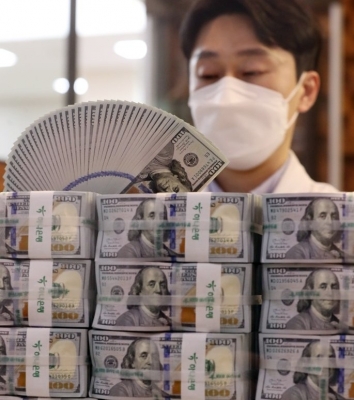
Foreign currency deposits in South Korea saw a decrease in January after three consecutive months of growth, as reported by the Bank of Korea. The total foreign currency deposits held by residents dropped to $118.03 billion by the end of January, down by $1.4 billion compared to the previous month. This decline was primarily driven by a reduction in corporate deposits.
This decline marked the first monthly decrease since October, following a period of increases in November and December. Corporate foreign currency deposits fell by $1.82 billion to $100.06 billion, while individual holdings increased by $420 million to $17.35 billion. Among different currencies, U.S. dollar-denominated deposits rose by $400 million to $96.34 billion, and Japanese yen deposits increased by $520 million to $9.51 billion.
On the other hand, euro-denominated deposits decreased by $2.36 billion to $9.39 billion, and Chinese yuan deposits slipped by $70 million to $1.38 billion. The local currency, the won, has shown some recovery from its low point against the U.S. dollar, stabilizing around 1,430 won per dollar. Amid this volatility, the won opened at 1,432.2 per dollar on the recent Friday, showing a slight decline from the previous session.
Banks in South Korea experienced a rise in overall lending rates for the third consecutive month in January. This increase was mainly driven by higher household loan rates due to stricter regulations aimed at stabilizing the housing market. The average interest rate on new bank loans reached 4.24 percent in January, marking a 0.05 percentage point increase from December. Specifically, the rate on new household loans climbed by 0.15 percentage point to 4.5 percent, with the average rate on home-backed mortgage loans rising to 4.29 percent.
