


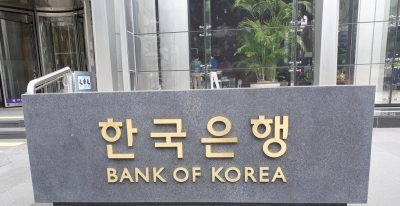
Foreign currency deposits in South Korea saw a rise in November after three months of decline, as per data from the Bank of Korea. The total foreign currency-denominated deposits held by residents reached US$103.55 billion by the end of November, marking an increase of $1.71 billion from the previous month. This growth follows a recent decline attributed to increased corporate repayments and overseas investments.
Residents in this context include South Korean citizens, long-term foreign residents, and foreign companies, excluding interbank deposits. The recent increase in November was driven by companies receiving payments for current transactions and setting aside funds for the repayment of foreign-currency borrowings. Corporate foreign currency deposits increased by $1.67 billion to $88.43 billion, while individual holdings rose to $15.11 billion.
The breakdown by currency shows that U.S. dollar-denominated deposits rose significantly by $1.96 billion to $87.59 billion. In contrast, Japanese yen deposits decreased by $500 million to $8.13 billion. Euro deposits grew to $5.4 billion, an increase of $390 million, while Chinese yuan deposits declined to $1.14 billion, down by $100 million.
South Korean stocks experienced a slight decline despite gains in big-cap tech shares, with the benchmark Korea Composite Stock Price Index (KOSPI) slipping by 5.92 points to 4,214.64 by late Tuesday morning. The market, which had been on an upward trend, saw foreign and institutional investors as net sellers, counterbalancing the buying activity by retail investors. The recent sessions had witnessed strong gains in big-cap semiconductor shares, nearing the index’s all-time high set in November.
