


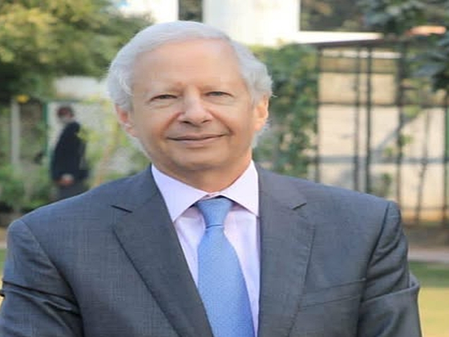
The India–US relationship, according to former US Ambassador Kenneth Juster, remains robust despite current challenges. Juster highlighted India’s commitment to strategic autonomy and its increasing alignment with the US, especially in response to China’s actions. While India has drawn closer to the US over the years, it has refrained from formal alliances to maintain independence.
Juster emphasized that China’s assertiveness, particularly along the disputed border, has been a significant factor in India’s strategic realignment towards the US. He acknowledged the recent strains in the relationship during the second Trump administration, which have raised concerns in India. However, Juster noted that cooperation persists across various sectors, including defense, trade, technology, and energy security.
The former diplomat also pointed out India’s expanding global presence, citing its involvement in groupings like the Quad and engagements with Europe, the Middle East, and the Indo-Pacific. He underscored India’s economic growth as a key aspect of its foreign policy, highlighting its rise as the world’s fourth-largest economy with a GDP of around $4.15 trillion. Juster cautioned that India faces challenges in balancing global aspirations with domestic needs due to its large population and relatively low per capita income.
Regarding trade issues, Juster acknowledged tensions between the US and India, particularly concerning market access and tariffs. He mentioned Washington’s perception of India’s relatively closed market but stressed the importance of addressing these matters through constructive dialogue rather than pressure tactics. Juster also raised concerns about India’s energy ties with Russia, suggesting that India might reduce its dependence gradually as market dynamics evolve.
Reflecting on his tenure, Juster praised the close coordination between the US and India during crises such as the Pulwama attack and the border standoff with China. He highlighted the significance of the India–US partnership in ensuring stability in the Indo-Pacific region and beyond. Despite differences on trade, Russia, and strategic priorities, both countries view the relationship as crucial for regional security and cooperation.
