


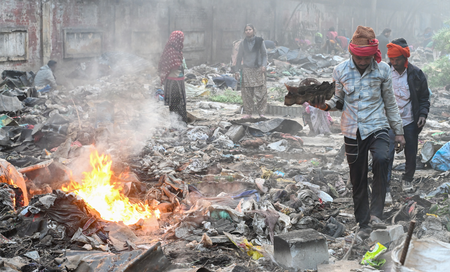
Garbage collection in Dhaka, Bangladesh’s capital, has transformed into a profitable business intertwined with political influence. The control over waste management shifts with each change in government, where local politicians use their power to secure contracts and eliminate competition. What should be a simple municipal service has evolved into a multi-million “waste economy” where power and profit intersect.
In Dhaka, small entrepreneurs like Shahabuddin Ali invest significant sums to secure waste collection contracts, hoping for steady profits. However, political interference often disrupts their operations, leading to financial losses and struggles to support their families. The waste management sector in Dhaka is divided into 75 wards, with contracts supposedly assigned through tenders, but political leaders reportedly control the process.
The trade of waste collection in Dhaka is highly lucrative, with the potential for significant profits. Despite official regulations capping fees at Tk 100 per household, residents often end up paying much more due to inflated charges. The nexus between politics and waste management has created a parallel economy, significantly overshadowing the city’s official sanitation budget.
Residents in Dhaka feel trapped by waste collectors who charge exorbitant fees, while city officials acknowledge the influence of political patronage in the sector. Despite promises to crack down on contractors overcharging residents, skepticism remains high among the population regarding the effectiveness of these measures.
