


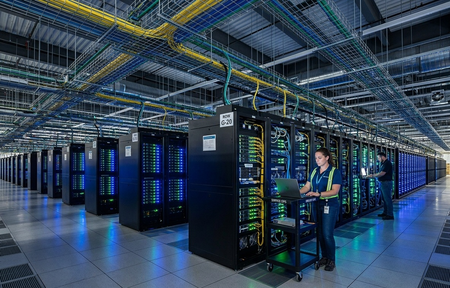
Global electricity demand for data centers is projected to increase by 26.4% in 2026, reaching 565 terawatt hours compared to 447TWh in 2025, as per a report. This surge is attributed to the rise in compute-intensive artificial intelligence workloads, leading to unprecedented power needs, according to insights from Gartner, Inc.
The report forecasts that data center power demand will escalate to 132 gigawatts in 2026, up from 104 gigawatts in 2025, and is expected to reach 290 gigawatts by 2030. This growth reflects the significant scale and pace of GenAI, which is driving the increased demand for power.
Director analyst at Gartner, Linglan Wang, highlighted that AI capacity is now limited by power availability, making data center power security crucial for scaling and protecting margins in the global AI competition. The adoption of AI-optimized servers is a key factor driving the surge in data center power consumption.
AI-optimized server adoption is estimated to contribute to 31% of data center power consumption in 2026, surpassing that of conventional servers by 2027. With data center power consumption expected to exceed 1,200TWh by 2030, there are concerns that grid supply may not meet the demands of future data center construction, impacting all data center users.
To address these challenges, infrastructure and operations (I&O) leaders are advised to prioritize efficiency upgrades, secure grid access, invest in high-efficiency cooling systems, and embrace edge computing to manage power constraints and ensure sustainable growth. Cooling and other infrastructure requirements are also projected to increase by 22.6% in 2026 and 24.6% in 2027.
A recent report highlighted that data centers consumed electricity equivalent to Saudi Arabia last year and warned that doubling electricity use by 2030 could necessitate planting 6.7 billion trees over a decade to offset the carbon footprint associated with the increased demand.
