


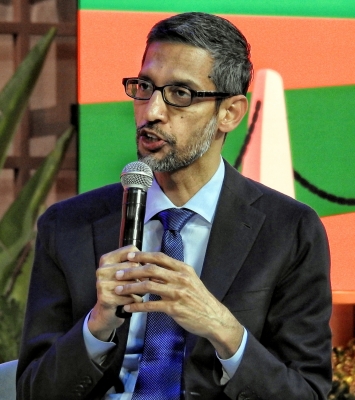
Google CEO Sundar Pichai encountered protests and walkouts during his keynote address at Stanford University’s commencement. Despite avoiding the topic of artificial intelligence to prevent being booed, around 200 students left the ceremony in protest of Google’s connections to Israel and other issues, as reported by SFGate. While artificial intelligence aligns with the tech-focused graduates of Stanford, speakers at all college commencements this year faced backlash when discussing this subject. Pichai instead shared his personal journey from India to Silicon Valley, highlighting his challenges and decisions, including his immigration to California, transition from a doctorate to a master’s degree, and early experiences at Google.
Around 200 students exited as Pichai began his speech, with some audience members displaying banners, blowing whistles, and waving Palestinian flags before departing. Notably, pro-Palestinian demonstrators voiced concerns over Google’s collaborations with the Israeli government, specifically referencing the 2021-deal Project Nimbus, a substantial cloud-computing agreement valued at $1.2 billion with Israel. Despite the initial disruptions, the ceremony proceeded, with Pichai’s personal anecdotes receiving sporadic applause and laughter from the audience. The walkouts at Stanford mark a series of protests at the university’s commencements in recent years, reflecting student activism on various issues, including Israel’s actions in Gaza and the university’s handling of pro-Palestinian demonstrations on campus.
In response to the protests, a separate event called the “People’s Commencement” was organized, featuring activist Mahmoud Khalil as the keynote speaker. Khalil, known for his pro-Palestinian activism at Columbia University, had been detained by US immigration authorities for more than 100 days last year. The incident at Stanford echoes a similar situation at the University of Arizona, where former Google CEO Eric Schmidt faced boos from graduates during his commencement speech for mentioning the pervasive influence of artificial intelligence.
