


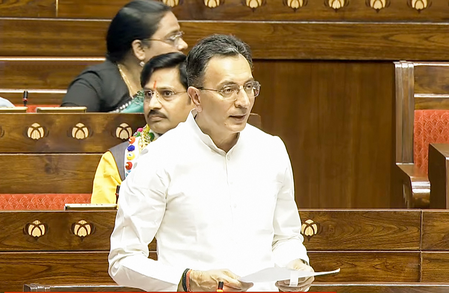
The government has taken action to remove specific Battery Management System mobile apps from app stores due to reports of their misuse allowing unauthorized remote control of e-rickshaw batteries. This decision follows the establishment of a nationwide integrated framework to enhance cybersecurity and digital resilience, as highlighted by MoS Electronics and Information Technology, Jitin Prasada, in Lok Sabha. The framework includes the National Cyber Security Coordinator to ensure coordination among various agencies for cybersecurity.
In line with these efforts, the Indian Computer Emergency Response Team, recognized as the national agency for addressing cyber incidents under the Information Technology Act, 2000, plays a crucial role. Additionally, the National Cyber Coordination Centre, operated by CERT-In, actively monitors cyberspace to identify security threats and collaborates with relevant bodies to mitigate risks effectively.
Furthermore, the government has set up the National Critical Information Infrastructure Protection Centre to safeguard critical information infrastructure in the country, as mandated by the IT Act, 2000. To modernize consumer protection in the current digital landscape, the Consumer Protection Act, 2019, overseen by the Department of Consumer Affairs, aims to address evolving challenges in consumer rights within the realms of globalization and e-commerce.
Under the ‘Information Security Education and Awareness (ISEA)’ project managed by MeitY, efforts are underway to enhance human resources in Information Security and raise public awareness on cyber hygiene and security practices. Various government portals disseminate educational material on cyber hygiene and security to promote a safer digital environment for all users.
