


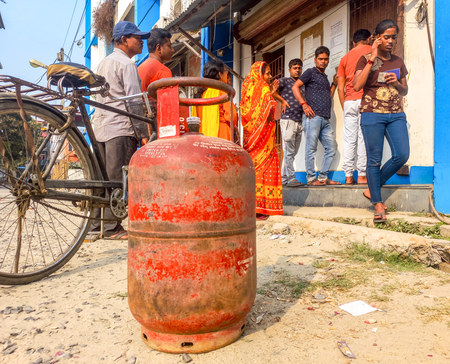
As hotels and restaurants face a commercial LPG shortage, the government has invoked the Essential Commodities (EC) Act to secure the supply of domestic cooking gas. This move directs refineries and petrochemical units to maximize LPG production and divert key hydrocarbon streams to the LPG pool for enhanced availability.
Authorities have instructed facilities to redirect essential hydrocarbon streams to the LPG pool to improve supply stability for household consumption. Additionally, the government has issued the Natural Gas (Supply Regulation) Order 2026 to oversee the production and sector-wise allocation of natural gas, including LNG and re-gasified LNG, ensuring priority supply to critical sectors.
Under this order, priority allocation will be given to sectors like domestic PNG supply, CNG for transport, LPG production, pipeline compressor fuel needs, fertiliser plants, tea industries, and other key industrial consumers. GAIL, in collaboration with the Petroleum Planning and Analysis Cell (PPAC), has been tasked with implementing natural gas supply regulations to uphold sector-wise allocation guidelines.
To prevent hoarding and manage inventory effectively, the government has extended the minimum waiting period for booking a domestic LPG cylinder refill from 21 to 25 days. This step aims to address panic buying trends in the market amid uncertainties related to the Iran war, ensuring a sufficient supply of LPG in the country.
Amid concerns of a surge in demand due to panic booking, officials emphasize that there is no shortage of LPG in the country. The decision to increase the booking time for LPG cylinders is a strategic measure to maintain inventory levels efficiently. Notably, households typically consume 7-8 LPG cylinders annually and should ideally not require a refill in less than 6 weeks.
In the interim, officials confirm that petrol and diesel prices will remain unchanged. Oil marketing companies, including Indian Oil, Bharat Petroleum, and Hindustan Petroleum, are expected to absorb the current cost pressures. While closely monitoring global oil markets, the government has no immediate plans to hike retail fuel prices.
Furthermore, as per the Parliament’s recent disclosure, India presently possesses a storage capacity for crude oil and petroleum products equivalent to 74 days, which can serve as a buffer during adverse situations like geopolitical conflicts.
