


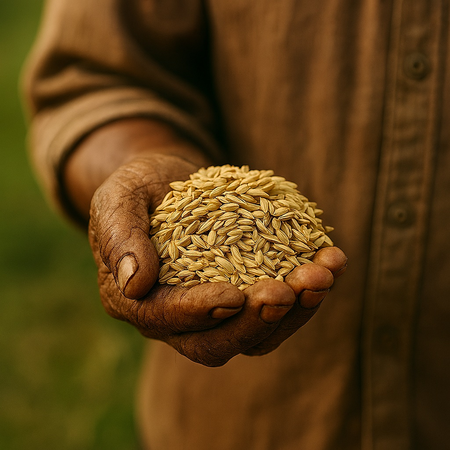
The government has granted permission for the export of basmati and non-basmati rice to specific European nations without the need for an inspection certificate for a six-month duration. This exemption from the inspection certificate requirement applies solely to European countries excluding the European Union member states, the United Kingdom, Iceland, Liechtenstein, Norway, and Switzerland. The decision aims to streamline exports in response to the increasing global demand for Indian rice.
The recent data indicated that rice exports in 2024-25 amounted to $12.95 billion, with pulses and millets exports reaching $855 million and $59.20 million, respectively. These figures underscore the growing international interest in diverse and climate-resilient cereal crops, solidifying India’s position in global food security and nutrition. Commerce and Industry Minister Piyush Goyal highlighted a significant 62% growth in rice exports from 2014 to 2025.
India’s rice production is primarily concentrated in states like Uttar Pradesh, Telangana, and West Bengal, while Uttar Pradesh, Madhya Pradesh, and Punjab are prominent wheat-producing regions in the country. In a separate development, the Food Corporation of India (FCI) and the World Food Programme (WFP) recently signed a Memorandum of Understanding (MoU) to supply rice for global humanitarian efforts against hunger. Under this agreement, FCI will provide 200,000 metric tonnes of rice (up to 25% broken) to WFP over five years, extendable by mutual agreement, at a mutually decided price of Rs 2,800 per quintal until 31 March 2026.
