


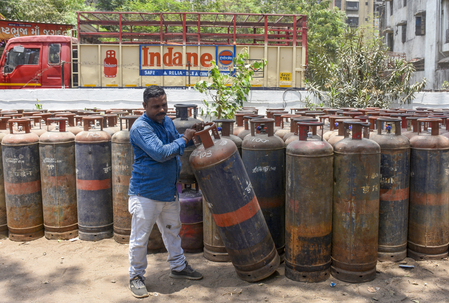
In a move benefiting industrial and commercial LPG consumers, the government has lifted all sectoral restrictions on non-domestic packed LPG supply. This decision restores supply levels to those before the West Asia crisis, thanks to enhanced indigenous LPG production and expected availability of imported LPG cargoes post the US-Iran peace agreement.
Moreover, the supply of bulk LPG, previously halted during the crisis, has been eased to 50% of pre-crisis consumption levels. This step offers significant relief to commercial and industrial users, aligning with the recent improvement in the overall LPG supply scenario.
During the West Asia crisis, the government had mandated the exclusive use of C3-C4 streams for LPG production to boost domestic supply. Now, the diversion of these streams to the LPG pool will be reduced. The government ensures that while enhancing the allocation for non-LPG uses, domestic LPG availability will not be compromised, maintaining a daily production of at least 40,000 metric tonnes.
The Ministry has directed the Centre of High Technology to allocate enhanced C3/C4 streams to petrochemical and other critical sectors. This allocation will be monitored organization-wise, with regular reports submitted to the ministry. The government’s focus remains on ensuring uninterrupted LPG availability to domestic consumers, with oil marketing companies playing a crucial role in stabilizing supplies amidst global challenges.
Oil marketing companies are instructed to maintain comprehensive data on commercial and industrial LPG consumers for efficient planning. A unified sectoral database will be established to enhance monitoring and operational coordination. The government also emphasizes expanding PNG connectivity, transitioning eligible consumers to Piped Natural Gas for cleaner and more efficient energy use.
To facilitate the revised supply arrangements, the Ministry has reached out to Chief Secretaries of all states and Union Territories. This decision underscores the government’s commitment to national energy security while promoting access to cleaner fuels, aligning with the nation’s energy needs.
