


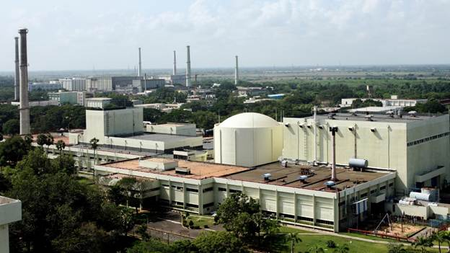
The government emphasizes that integrating nuclear energy with emerging clean energy technologies like hydrogen production is crucial for a sustainable energy future. Dr. Ajit Kumar Mohanty, Secretary of the Department of Atomic Energy (DAE) and Chairman of the Atomic Energy Commission (AEC), notes that nuclear power’s ability to offer reliable carbon-free electricity and high-temperature process heat is well-suited for supporting large-scale hydrogen production in India. The DAE has recently launched the world’s first Hydrogen Production Facility based on the Copper–Chlorine (Cu–Cl) Thermochemical Cycle, utilizing nuclear process heat from the Fast Breeder Test Reactor (FBTR) at the Indira Gandhi Centre for Atomic Research (IGCAR), Kalpakkam.
This facility, established as a technology demonstrator, validates hydrogen production using nuclear energy through the “Cu–Cl thermochemical process” developed by the Bhabha Atomic Research Centre (BARC), Mumbai. The successful integration of nuclear process heat with hydrogen generation signifies a significant technological advancement, paving the way for large-scale, carbon-free hydrogen production using advanced nuclear reactors. Dr. Mohanty commends the scientists, engineers, and technical teams of BARC and IGCAR for their dedication and innovation in turning an advanced scientific concept into a practical reality.
This milestone builds on over four decades of operational experience and technological expertise gained through the Fast Breeder Test Reactor program at IGCAR, as highlighted by Sreekumar G. Pillai, Director of IGCAR. The demonstration of hydrogen production using nuclear process heat demonstrates the adaptability of advanced nuclear systems and underscores IGCAR’s commitment to developing innovative technologies that support India’s transition to clean energy and enhance long-term energy security.
