


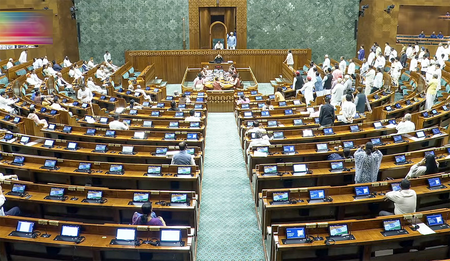
The Lok Sabha has introduced the Public Examinations (Prevention of Unfair Means) Amendment Bill, 2026, as a strong response to the issue of examination paper leaks. This move by the Narendra Modi government aims to address the recent NEET-UG 2026 controversy and restore public trust through stricter laws and faster investigations.
Experts believe that the proposed amendments should have led to a consensus in Parliament, given the widespread demand for enhanced measures against paper leaks and exam fraud. However, the Opposition’s disruption of debates on the legislation, designed to combat organized exam malpractices, has hindered progress. Analysts argue that obstructing discussions on measures for swifter investigations and harsher penalties does not benefit Indian students.
To combat the increasing scale and sophistication of exam fraud, the government has proposed significant changes to the current legal framework. The Bill suggests raising the minimum imprisonment term for major offenses from three to five years and doubling the maximum sentence to 10 years. Additionally, fines for organized paper leak networks could reach up to Rs 5 crore, with certain violations attracting fines of up to Rs 10 crore.
The focus of the Bill is also on expediting justice delivery. Investigative agencies are mandated to complete probes within two months, with Special Fast Track Courts conducting daily hearings nationwide to ensure trials conclude within three months of filing chargesheets. These measures aim to address students’ concerns regarding delayed investigations and prolonged legal proceedings.
The reforms are viewed as essential to enhance transparency, fairness, and credibility in India’s public exam system. By enforcing strict timelines and establishing specialized courts, the government not only aims to punish wrongdoers but also to instill confidence in students and parents regarding the integrity of future exams.
Despite successfully introducing the Bill, Parliament faced disruptions from the Opposition related to the NEET-UG controversy and other political issues, preventing further debate on the legislation.
