


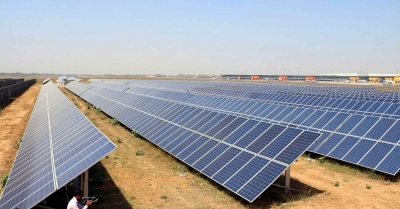
Gujarat saw a significant milestone in the 2025-26 fiscal year by preventing nearly 49.79 million tonnes of carbon emissions, marking its highest annual reduction to date. The state also reached a record in renewable energy generation, producing 67,655 million units, as per official data released on Tuesday.
This achievement represents Gujarat’s most substantial yearly decline in carbon emissions and aligns with the rapid expansion of electricity production from solar, wind, and other renewable sources. Over the past five years, the state has successfully avoided a total of 179 million tonnes of carbon emissions through its renewable energy expansion and green energy policies.
The state government highlighted that Gujarat annually emits around 442 million tonnes of greenhouse gases, emphasizing that the cumulative reduction over five years accounts for almost 40% of its yearly greenhouse gas emissions. The shift towards renewable energy, particularly solar and wind power, has notably decreased reliance on coal and other fossil fuels, leading to lower carbon emissions and a higher proportion of clean energy in the state’s energy mix.
Officials emphasized the importance of balancing economic progress with environmental preservation, echoing Prime Minister Narendra Modi’s vision of a clean and sustainable India. Gujarat’s initiatives in green energy have been spearheaded by Chief Minister Bhupendra Patel, aligning with the government’s commitment to environmental conservation and sustainable development.
Carbon emissions were linked to adverse impacts on public health, climate patterns, and daily life, with higher emissions contributing to global warming, extreme weather events, and environmental imbalances. The government stressed that transitioning to renewable energy sources can enhance air quality, mitigate health risks, and bolster energy security, underscoring the significance of sustainable energy practices.
Gujarat’s strides in renewable energy have been supported by key policies like the Integrated RE Policy 2026, the Green Hydrogen Policy, and the Gujarat Pumped Storage Policy. These initiatives have accelerated the state’s shift towards cleaner energy sources and environmental protection, with agencies like Gujarat Urja Vikas Nigam Limited (GUVNL) and Gujarat Energy Development Agency (GEDA) playing crucial roles in increasing the share of renewable energy in power generation.
The state has set an ambitious target of achieving 100 GW of renewable energy capacity by 2030 as part of its long-term energy strategy. This goal aligns with Prime Minister Narendra Modi’s vision of achieving net zero emissions by 2070 and supports India’s commitments under the Paris Agreement on Climate Change, showcasing Gujarat’s dedication to sustainable energy practices and environmental stewardship.
