


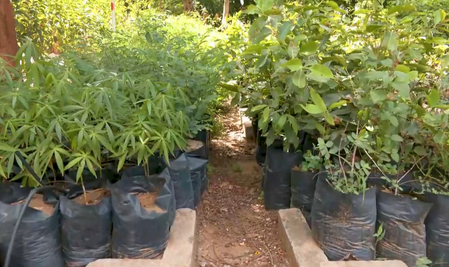
Gujarat has enhanced its nursery-based plantation program as part of the “Green Gujarat” initiative. The Forest Department in the state is increasing the production and planting of tall seedlings to boost survival rates and enhance the green cover.
Under this initiative, Rs 50 crore has been allocated to social forestry nurseries in Gujarat to produce high-quality planting material. The focus is on cultivating local species using the ‘Tall Seedling’ method, where saplings are grown to a height of six to eight feet before being distributed for plantation.
Officials highlight that this approach aims to improve survival rates and ensure robust growth post-transplantation. Farmers have expressed satisfaction with the government nurseries, citing benefits in terms of cost and post-plantation support.
Raju Patel, a farmer, mentioned that government nurseries provide a cost-effective alternative to private sources. He emphasized that plants from government nurseries are more affordable and come with additional guidance when needed.
Tulsidas Patel, another farmer, shared his positive experience with the Rajbhavan nursery, stating that plants sourced from there are now yielding fruitful results. He noted the ease of cultivation and good production from the plants obtained from the nursery.
The Forest Department is implementing the plantation drive across various stakeholder groups, including farmers, rural women, tribal communities, self-help groups, and citizens. State Forest and Environment Minister Arjun Modhwadia highlighted the large-scale implementation of the current phase of the program to make ‘Green Gujarat.’
Officials mentioned that 423 nurseries in the state are involved in developing planting material under the program. The annual target is to raise about one crore plants, focusing on enhancing quality and survival rates rather than just increasing numbers.
This initiative is part of Gujarat’s broader social forestry efforts to expand tree cover beyond traditional forest areas and promote plantation activities in rural and semi-urban regions. Besides environmental goals, the program is expected to create local employment opportunities related to nursery management and plantation activities.
