


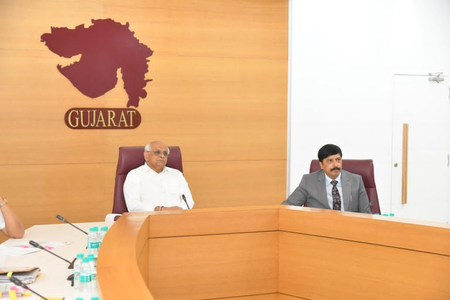
The Gujarat government has made changes to its ‘Vatan Prem Yojana’ scheme, allowing for a wider range of development projects in villages. These amendments aim to enhance public involvement and expedite project approvals for rural infrastructure. The revisions seek to engage individuals, organizations, and trusts associated with villages in Gujarat, even if they reside outside the district, state, or country.
The updated scheme encourages contributions from donors with emotional ties to village areas, facilitating the creation of public amenities through a mix of donor funds and state grants. Development projects are now categorized as ‘Category A and Category B,’ each with specific contribution structures based on whether the work is executed by a government agency or a donor-selected entity.
Under the new framework, the government will fund 60% of Category A projects if implemented by a government agency, with donors covering the remaining 40%. For Category B projects, the government’s share is 40%, while donors contribute 60%. When donors choose the implementing agency, the state’s contribution for Category A projects drops to 40%, with donors funding 60%. In Category B projects under this scenario, the government will provide 20%, and donors will contribute 80%.
The scheme now permits a broader range of development works, including the construction of educational facilities, healthcare centers, village infrastructure, and environmental projects. The approval process has also been streamlined to expedite project clearances, with financial powers delegated to committees at different levels. The government hopes these changes will encourage Non-Resident Gujaratis (NRGs) and local donors to play a more active role in developing their native villages, fostering progress towards transforming rural areas into “global villages.”
