


The Gujarat government has given the green light to a new rural infrastructure scheme aimed at constructing community facilities in villages across the state. These facilities, known as “Atalwadis,” will have the capacity to accommodate 500 people and will serve various purposes such as hosting social, religious, and public events. Additionally, they will double up as emergency shelters during natural disasters.
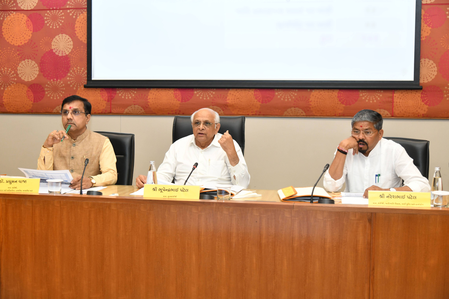
Chief Minister Bhupendra Patel endorsed this decision during a recent state Cabinet meeting. The scheme, named the “Atalwadi Scheme,” is designed to enhance amenities for residents living in the most remote areas of Gujarat. Government spokesperson and Minister Jitu Vaghani announced the approval of the scheme, emphasizing its focus on providing improved facilities to citizens residing in rural parts of the state.
Under the Atalwadi Scheme, each facility will feature a spacious open hall with an arch shed, a kitchen, separate restroom facilities for men and women, and basic provisions for clean drinking water. Villages with populations exceeding 2,000 will be the initial beneficiaries of this initiative. Minister Vaghani highlighted that the scheme aims to offer affordable rental rates for modern facilities to ordinary and middle-class rural families for events like marriage ceremonies, social gatherings, and religious functions.
The Minister further explained that these structures will play a crucial role during emergencies triggered by natural disasters such as cyclones and heavy rainfall. In such situations, the Atalwadis will serve as safe shelter homes for villagers, ensuring their safety and well-being. Minister Vaghani elaborated that the selection of land for constructing these facilities will be from open spaces owned by gram panchayats, designated plots by panchayats, or public areas near village landmarks like temples or tourist spots.
Moreover, the facilities will be accessible to all residents without discrimination, fostering mutual cooperation and social harmony within villages. The state government has allocated a budget of Rs 60 crore for this scheme in the current financial year, demonstrating its commitment to enhancing rural infrastructure and community resilience.
