


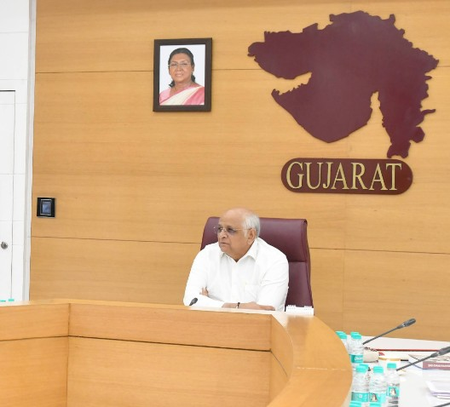
The Gujarat government, led by Chief Minister Bhupendra Patel, conducted a high-level meeting in Gandhinagar to assess readiness for potential El Niño effects. Discussions centered on ensuring water availability, agricultural planning, and inter-departmental coordination in anticipation of the monsoon-related weather pattern. Key decisions included expanding the reach for filling village and taluka lakes using Narmada pipeline water to mitigate risks related to rainfall variability.
State officials emphasized the importance of drinking water security, livestock protection, and farmer support through contingency planning. The government directed the filling of over 300 lakes in North Gujarat and replenishing reservoirs in Saurashtra under the SAUNI scheme. Additionally, measures were taken to integrate water supply operations closely with the Narmada network to avert any drinking water shortages.
In the agricultural sector, preparations for the Kharif 2026 season, including seed and fertilizer arrangements, were deemed sufficient. A contingency crop plan was devised to promote short-duration, low-water-use crops, complemented by scientific advisories from agricultural departments and universities. Satellite-based monitoring is being utilized to track soil moisture levels and crop health, with over 50 lakh farmers receiving real-time weather updates and agricultural advisories through an AI-enabled platform.
Livestock management strategies were discussed, with a focus on maintaining adequate fodder reserves and making advance preparations for adverse weather conditions. The government assured that the current fodder stock is adequate for up to two years. Historical data revealed that Gujarat encountered eight Kharif El Niño years between 2000 and 2026, with instances of above-normal rainfall during some El Niño years. Officials urged citizens to follow official guidance and avoid misinformation during such periods.
