


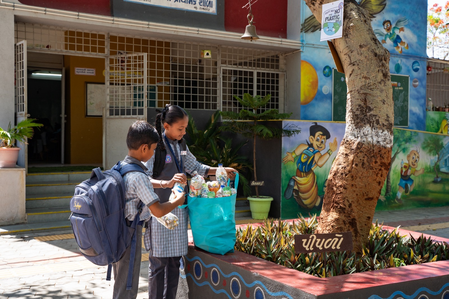
Gujarat has been acknowledged nationally for 15 schools participating in the Swachh Evam Harit Vidyalaya Rating (SHVR) 2025-26 program. Each chosen school will be awarded a certificate and a grant of Rs one lakh to support their environmental and sustainability efforts. The initiative, part of the fifth anniversary of the National Education Policy (NEP)-2020, evaluates schools based on cleanliness, environmental sustainability, safety, and inclusivity.
The recognized schools include three from Rajkot, two each from Vadodara, Navsari, and Porbandar, and one school each from Ahmedabad, Anand, Aravalli, Banaskantha, Valsad, and Mehsana districts. State Project Director J. Ranjit Kumar mentioned that the selected schools will receive special certificates from the Central government along with financial aid to maintain green practices and future environmental projects. The program aims to offer schools a clean, green, inclusive, safe, and sustainable educational environment.
Under NEP-2020, schools were assessed on various criteria such as water access, sanitation facilities, handwashing with soap, operational systems, behavior change, and capacity-building measures. The evaluation also considered activities like energy conservation, recycling, and eco-club operations under Mission LiFE. More than 44,000 government, grant-in-aid, and private schools in Gujarat participated in the program by completing self-assessments.
According to state Education authorities, the participation in the program was attributed to the efforts led by Chief Minister Bhupendra Patel, Education Minister Pradyuman Vaja, and Minister of State for Education, Rivaba Jadeja. The assessment process involved a multi-tier verification mechanism with district and state-level committees reviewing applications. A total of 262 schools were shortlisted at the district level, with 20 schools selected at the state level from various districts. Fifteen schools were then chosen for national-level certification under the SHVR 2025-26 program.
The initiative aims to promote long-term sustainable practices in schools while enhancing sanitation, environmental awareness, and climate resilience within educational institutions.
