


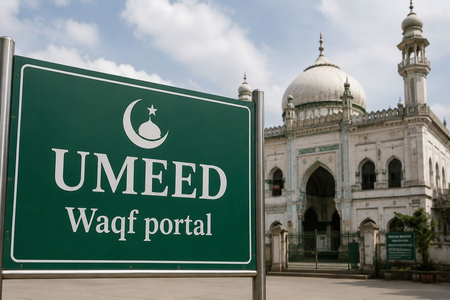
The Gujarat State Waqf Board is calling on all administrators, trustees, and stakeholders in the state to complete mandatory registration on the UMEED Portal by May 26. The Board emphasizes that no further extension will be granted under the current legal framework. A dedicated helpline has been set up to provide technical support during the registration process.
The UMEED digital governance framework, introduced by the Ministry of Minority Affairs, aims to centralize and digitize Waqf property records nationwide. Launched on June 6 last year, the portal serves as a single national database for recording details of Waqf properties, enhancing transparency, accountability, and legal protection of these assets.
The UMEED platform acts as a unified system for verification, geo-tagging, monitoring, and digitized management of Waqf properties. It is designed to replace the fragmented record-keeping systems previously in place at state and local levels. Additional modules on the portal, such as survey and lease management functions, have been introduced to strengthen property documentation and administrative oversight.
The Gujarat State Waqf Board emphasizes that the UMEED portal represents a structural reform in Waqf governance, ensuring long-term protection of properties and reducing disputes from incomplete or unverified records. Consolidating data on a single platform will facilitate more efficient administration and help address irregularities in property management.
Under the UMEED Act framework, institutions have a fixed time window to upload existing Waqf property details. Failure to comply within the specified period may lead to administrative and legal complications, with institutions bearing full responsibility for any consequences. Despite repeated advisories, a significant number of Waqf institutions in the state are yet to complete registration, prompting the Board to urge prompt action to avoid incomplete applications.
