


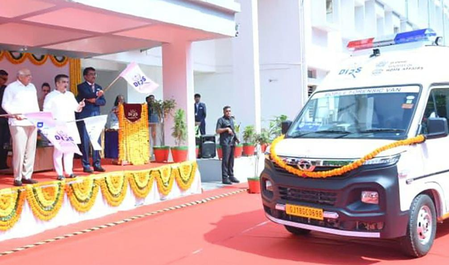
Gujarat’s Mobile Forensic Vans (MFVs) have been present at over 37,000 crime scenes in the last two years, offering crucial on-site scientific aid to police investigations. These 47 MFVs, serving as mini forensic labs, assist in preserving evidence at crime spots, conducting initial scientific examinations, and providing preliminary forensic evaluations before samples are sent for detailed analysis. Timely evidence collection and preservation are highlighted as vital in criminal probes to prevent any contamination that could compromise forensic material integrity.
The state government revealed that 28 out of the 47 Mobile Forensic Vans in Gujarat were upgraded in 2024 following guidelines from the Union Ministry of Home Affairs. These vans have visited a total of 37,269 crime scenes during the mentioned period, with the highest number of visits related to fatal and life-threatening incidents, totaling 9,022 cases. Additionally, they responded to various cases, including rape, fire incidents, house-breaking, theft, narcotics, attempted murder, murder investigations, robbery, firing, and explosion incidents.
Each Mobile Forensic Van is equipped with 12 specialized scientific kits, such as DNA and sexual assault evidence collection kits, narcotics screening kits, explosives screening kits, gunshot residue kits, fire investigation kits, and more. Furthermore, these vans are furnished with essential equipment like stereo microscopes, DSLR cameras, GPS-enabled body-worn camera systems, laptops, printers, and mini refrigerators, enabling forensic personnel to conduct preliminary examinations of various evidence types at the crime scene itself.
The primary objective of these Mobile Forensic Vans is to offer immediate scientific support, safeguard evidence, prevent contamination, and aid in crime scene reconstruction. Notably, their role is particularly crucial in rape and POCSO investigations, emphasizing the significance of timely identification and collection of biological evidence. The utilization of body-worn cameras, DSLR photography, and CCTV-based documentation has significantly enhanced the scientific documentation of crime scenes in Gujarat.
