


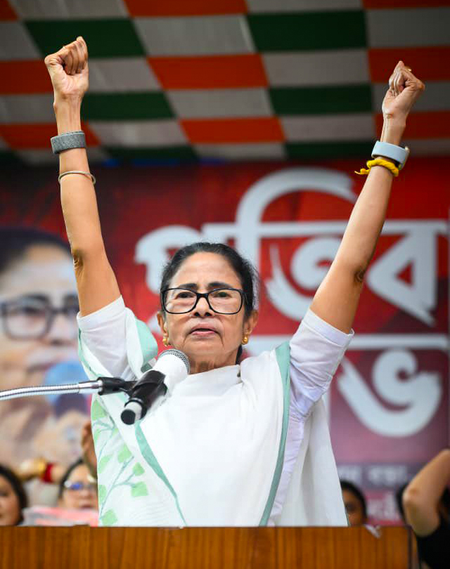
Of the 294 Assembly constituencies in West Bengal heading to polls in two phases, all eyes are on the Bhabanipur Assembly constituency. Here, Chief Minister Mamata Banerjee faces off against Leader of the Opposition Suvendu Adhikari, making it a crucial contest. Adhikari is also contesting from Nandigram, where he has been a two-time legislator.
Bhabanipur, a post-delimitation constituency, holds significance due to its community-wise voter distribution. With around 76% Hindu voters, split between Bengali-speaking and non-Bengali-speaking, and minority voters making up about 24%, the dynamics are intricate. Trinamool Congress’s success here has been linked to strong support from minorities and Bengali-speaking Hindus.
Historically, Left parties have had minimal influence in Bhabanipur, which was once a Congress stronghold. Since 2014, the BJP has gained ground, especially in wards with non-Bengali-speaking Hindu voters. Recent elections have shown a shift in voter preferences, with the BJP making notable inroads in certain areas.
The electoral landscape in Bhabanipur has seen changes, with the Trinamool Congress facing challenges due to voter deletions and adjudications. The BJP’s strategic move to field Adhikari against Banerjee is viewed as a tactic to constrain her campaign. This contest marks the second direct face-off between the two leaders, following Adhikari’s victory in Nandigram in 2021.
