


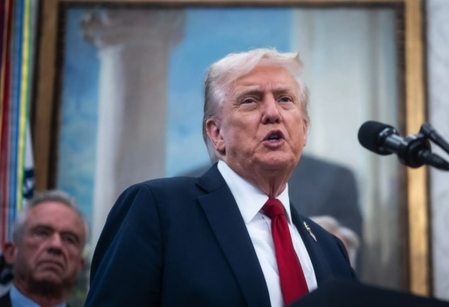
The Republican-controlled House of Representatives narrowly passed a $70 billion package to fund US immigration enforcement agencies for the next three years. This move is a significant win for President Donald Trump on one of his key issues. The legislation, named the Secure America Act, was approved 214-212 along party lines and is now awaiting Trump’s signature. It provides long-term funding for US Immigration and Customs Enforcement (ICE) and Customs and Border Protection (CBP), resolving months of deadlock over immigration enforcement funding.
The vote marks the end of a four-month political standoff, during which Democrats aimed to link funding to new restrictions on immigration enforcement practices. Republicans utilized the budget reconciliation process to overcome Democratic opposition and push the legislation through Congress. House Homeland Security Committee Chairman Andrew Garbarino expressed satisfaction with the vote, emphasizing that Republicans have fulfilled their duty to fully fund the Department of Homeland Security. He highlighted that the resources allocated will help secure borders, combat illicit drug trafficking, and address human trafficking and smuggling.
The legislation is seen as crucial in supporting the efforts of DHS law enforcement personnel who work tirelessly to protect the nation and its people. Michael Guest, chairman of the House Homeland Security Subcommittee on Border Security and Enforcement, stressed that the funding ensures ICE and Border Patrol personnel have the necessary resources to disrupt criminal activities, combat human trafficking and drug smuggling, and eliminate public safety threats from communities. The White House and Republican supporters view this legislation as a pivotal step in upholding Trump’s immigration policies.
Homeland Security Secretary Markwayne Mullin emphasized the urgency of passing the Secure America Act to fully fund critical components. Tom Homan, Trump’s border czar, anticipates a significant boost in enforcement efforts with the new funding. He highlighted that the $70 billion allocation will enhance targeting and lead to increased arrests. However, Democrats and immigrant advocacy groups have criticized the legislation, arguing that it expands enforcement powers without adequate oversight.
Todd Schulte, president of FWD.us, labeled the package as a “stunning policy failure,” questioning the allocation of vast sums to immigration enforcement amid rising living costs and reduced healthcare funding. Rep. Grace Meng, chair of the Congressional Asian Pacific American Caucus, accused Republicans of granting ICE and Border Patrol an additional $70 billion without sufficient accountability or oversight. CAPAC members oppose the funding increase without substantial reforms.
The legislation underscores the deep divide between Republicans and Democrats on immigration issues. While Republicans stress the importance of robust enforcement for border security and public safety, Democrats insist that additional funding must be accompanied by reforms and safeguards to prevent abuses.
