


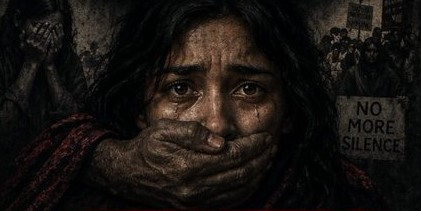
Human rights violations in Pakistan have surged, with a particular impact on vulnerable groups, notably women who bear the brunt of structural inequalities leading to a femicide crisis. Gender-based violence, encompassing acid attacks, forced marriages, rape, and domestic abuse, persists widely in Pakistan, as highlighted in a recent report. The country witnesses numerous cases of “honour killings” annually, with at least 405 reported in 2024, though the actual figures are likely higher due to underreporting and inadequate enforcement.
More than 2,000 cases of domestic violence and 5,000 instances of rape were documented in 2024, underscoring Pakistan’s reputation as one of the most perilous places for women globally. A 2025 United Nations report revealed that a significant proportion of Pakistani women lack reproductive autonomy, facing coercion and mistreatment concerning their reproductive health. The prevalence of underage marriages, validated under Islamic law by a Lahore High Court ruling, remains a prevalent issue in Pakistan, with millions married before turning 18 years old, as reported by Genocide Watch.
Pakistan’s standing in the Global Gender Gap Index by the World Economic Forum is at the bottom, reflecting pervasive gender disparities. The country grapples with an education crisis, with over 21 million children out of school due to poverty, societal pressures, child labor, and discrimination. Besides gender inequality, religious minorities like Ahmadis, Christians, and Hindus encounter discrimination, violence, and marginalization due to blasphemy laws and lax enforcement. Journalists, activists, and academics also face censorship, threats, and violence orchestrated by the Pakistani government, as per the Genocide Watch report.
The human rights landscape in Pakistan is further complicated by security threats, with militant groups such as Tehreek-e-Taliban Pakistan, the Islamic State of Khorasan Province, Al-Qaeda, and the Balochistan Liberation Army (BLA) carrying out attacks in recent years. Genocide Watch has called upon the European Union to leverage GSP+ review mechanisms to advocate for specific reforms in freedom of expression, religious freedom, and women’s rights in Pakistan. The report also urges partner nations to enhance support for journalists, defenders, and religious minorities facing immediate risks through emergency relocation, humanitarian visas, and protection referrals.
Genocide Watch emphasized the need for public human rights benchmarks in engagements with Pakistan, without imposing excessive conditions beyond existing bilateral capacities. The organization recommended that the United Nations High Commissioner for Human Rights designate Pakistan as a country of special concern due to its alarming human rights violations against ethnic and religious minorities. Diplomatic and economic allies of Pakistan, including the United States, China, and the United Kingdom, were urged to encourage the nation to combat “honour killings” and implement substantial structural changes safeguarding the lives and futures of women.
