


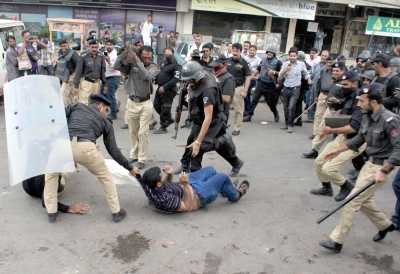
The Human Rights Commission of Pakistan (HRCP) has raised serious concerns about the diminishing civic space, erosion of judicial independence, and growing insecurity in Pakistan over the past year. In its recent report titled ‘State of Human Rights in 2025’, the HRCP highlighted the significant suppression of the right to freedom of expression, particularly the ability to question authority and demand accountability, with far-reaching implications for the rule of law and fundamental freedoms.
The report pointed out that legal and institutional mechanisms were increasingly utilized to suppress dissent, with amendments to the Prevention of Electronic Crimes Act and the use of sedition and anti-terrorism laws leading to the widespread targeting of journalists, political workers, activists, and lawyers. This resulted in reports of intimidation, enforced disappearances, and restrictions on movement, fostering a climate of fear and self-censorship that hindered public discourse and obscured human rights violations.
According to the HRCP, amendments to Pakistan’s Anti-Terrorism Act 1997 at both federal and provincial levels, particularly in Balochistan, empowered law enforcement agencies and the armed forces to detain individuals for up to three months without charge or judicial oversight, thereby expanding the potential for arbitrary detention and undermining liberty and due process protections.
The report also highlighted a concerning decline in judicial independence throughout Pakistan, notably following the enactment of the 27th Constitutional Amendment, which altered judicial appointments and increased executive influence. It further mentioned that certain court decisions in 2025 restricted democratic space, raising doubts about due process and the separation of powers, including rulings permitting military trials of civilians and removing reserved seats from the Pakistan Tehreek-i-Insaf (PTI) party.
