


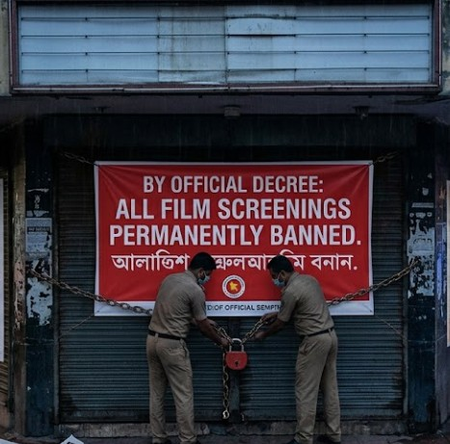
A human rights organization strongly criticized the suspension of a film screening in the Brahmanbaria district of Bangladesh, labeling it a dangerous precedent for the country’s cultural scene. Justice Makers Bangladesh in France (JMBF) expressed serious concerns, emphasizing that the move was an attack on cultural freedom and freedom of expression in Bangladesh. The Brahmanbaria Film Society had organized a screening of the film “Bonolota Express” on May 30 at Annada Government High School in Brahmanbaria town, coinciding with Eid al-Adha.
The JMBF highlighted that a campaign opposing the screening was initiated on social media by students affiliated with the Qawmi Chhatra Oikya Parishad, a coalition linked to Qawmi madrasa institutions and conservative religious groups. The campaign included crossed-out film posters, calls to halt the screening, and the spread of negative and inflammatory content, creating a climate of fear and tension. The human rights organization cited media reports and social media posts to underscore the nature of the opposition to the cultural event.
The pressure mounted, and on May 29, just a day before the scheduled screening, the Brahmanbaria district administration announced the “temporary suspension” of the event. The JMBF criticized this decision, stating that yielding to fundamentalist pressure and online campaigns sets a worrisome precedent. The organization expressed concern over the erosion of the constitutional and legal right to screen approved films, cautioning that such actions could embolden further attacks on cultural activities.
JMBF’s founding President, Shahanur Islam, held the Bangladesh Nationalist Party (BNP) government and relevant authorities accountable for the incident. He remarked that succumbing to extremist pressure instead of safeguarding citizens’ right to cultural participation signifies a failure to defend cultural freedom. Islam warned of potential future interference and assaults on art, culture, literature, cinema, and freedom of thought if fundamentalist pressures are not effectively addressed.
