


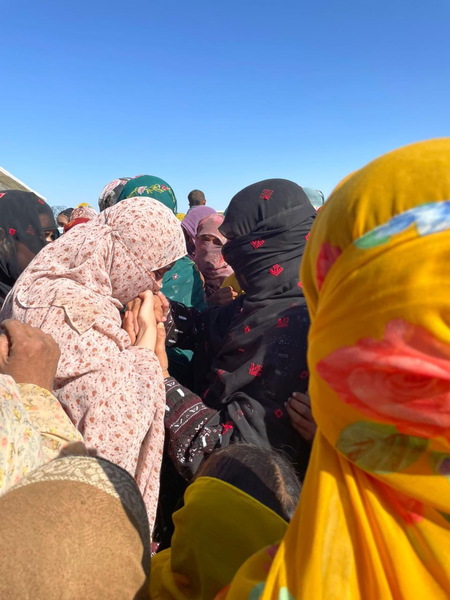
Despite restrictions imposed by Pakistani authorities, hundreds gathered at Seaview in Karachi for the Aurat March, addressing critical issues affecting women in the country. The event has evolved into a prominent platform in Pakistan for discussions on women’s rights and social justice, as highlighted in a report. Among the notable moments was a tribute to Shanti, a 19-year-old bride from Lyari, whose tragic death sparked important conversations on marital abuse and societal silence.
Pakistan’s constitution upholds the rights to freedom of speech and peaceful assembly for all citizens, regardless of the popularity or controversy of their views. The role of authorities, as emphasized by The Express Tribune, is to safeguard these constitutional freedoms, ensuring that individuals can express themselves safely and responsibly. The recent detention of Aurat March organizers and volunteers by the Human Rights Commission of Pakistan (HRCP) outside the Karachi Press Club drew condemnation for restricting the right to hold a press conference.
The HRCP criticized the authorities for what they deemed an “increasingly repressive approach to governance,” where dissent is viewed as a threat rather than a democratic necessity. The arrest of several Aurat March leaders, including prominent activist Sheema Kermani, underscores a troubling pattern of denying public space for citizens to voice their rights. The HRCP reiterated the importance of upholding the rights to peaceful assembly and freedom of expression, particularly for marginalized groups, in the face of growing governance challenges.
