


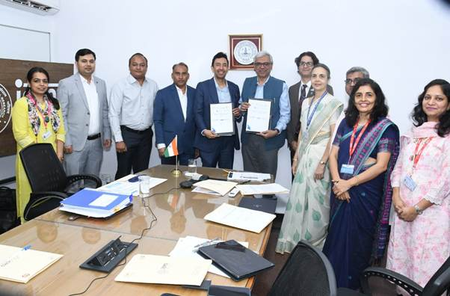
The Indian Council of Medical Research (ICMR) has authorized three indigenous biomedical technologies for development, manufacturing, and commercialization by top domestic pharmaceutical and vaccine manufacturers. This move aims to expedite the transformation of publicly funded research into cost-effective healthcare solutions and enhance India’s biomedical innovation sector, as per a statement from the Ministry of Health and Family Welfare. One of the licensed technologies is SHetA2, an innovative anti-HPV therapeutic candidate for treating Cervical Intraepithelial Neoplasia (CIN), which has been licensed to Emcure Pharmaceuticals Ltd.
The other two technologies are next-generation vaccine technologies targeting enteric bacterial infections, developed at ICMR–National Institute of Research in Bacterial Infections (ICMR-NIRBI), Kolkata, and licensed to Biological E Ltd. SHetA2, a pioneering targeted therapeutic candidate, was a collaborative effort between Dr. Showket Hussain from ICMR National Institute of Cancer Prevention and Research (ICMR-NICPR) and Dr. Doris M. Benbrook from Stephenson Cancer Center, University of Oklahoma, USA. This technology selectively eliminates HPV-induced precancerous and cervical cancer cells while preserving healthy cells, offering a potentially safe, affordable, and minimally invasive treatment for cervical cancer.
The vaccine technologies developed by the team include a fusion construct with Salmonella typhi outer membrane protein as a promising next-generation typhoid vaccine candidate. Additionally, there is a recombinant vaccine composition targeting Salmonella typhi or paratyphi and Shigella infections, designed to offer broader protection against major enteric bacterial pathogens. These technologies collectively aim to bolster India’s initiatives in cancer prevention and infectious disease management, while promoting the indigenous advancement of next-generation therapeutics and vaccines. ICMR has set up an integrated innovation ecosystem supporting healthcare technologies throughout the innovation spectrum, from discovery and intellectual property protection to clinical validation, regulatory assistance, and commercialization, the statement highlighted.
