


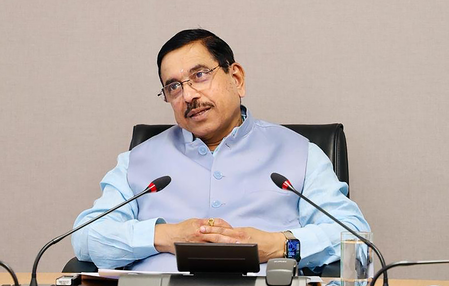
Illicit trade in India, described as a “shadow economy” by Minister of Consumer Affairs, Food & Public Distribution Pralhad Joshi, has detrimental effects on consumer trust, honest businesses, and public revenues. The minister emphasized the importance of initiatives like the Central Consumer Protection Authority, the National Consumer Helpline, and the Jago Grahak Jago campaign in empowering citizens against illicit trade. He highlighted the necessity for a collaborative effort involving the government, industry, and society to combat this issue effectively.
Nidhi Khare, Secretary of the Ministry of Consumer Affairs, Food and Public Distribution, highlighted the evolution of consumer protection towards a technology-driven system. She mentioned the transition from awareness-building to AI-driven grievance redressal, resulting in a faster, more efficient, and transparent system. Khare also noted significant improvements in grievance redressal processes, with resolution timelines reduced from 63 days to approximately 21 days, and in some online cases, even within 72 hours.
During a seminar addressing illicit trade, senior policymakers, judicial leaders, enforcement officials, industry representatives, and consumer organizations came together to discuss the growing threat posed by illicit trade and the necessity for robust consumer-centric frameworks. P C Jha, Advisor at FICCI CASCADE and Former Chairman of CBIC, emphasized the importance of disrupting the financial flows of smuggling and counterfeiting to dismantle these networks effectively, rather than solely intercepting consignments.
Anil Rajput, Chairman of FICCI CASCADE, stressed the need for enhanced implementation of rules and deeper institutional coordination to address the evolving challenges posed by illicit trade. He called for improved intelligence-sharing among agencies, stronger enforcement mechanisms, and increased use of technology to detect and prevent violations.
