


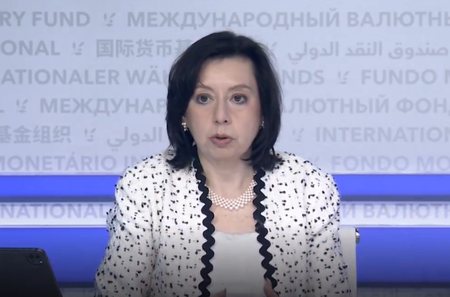
The International Monetary Fund (IMF) mentioned on Thursday that the ceasefire in the Middle East and progress towards reopening the Strait of Hormuz have reduced immediate threats to the global economy. Julie Kozack, Director of the IMF’s Communications Department, stated that recent developments have helped stabilize commodity markets and financial conditions, despite the ongoing impact of the conflict testing the global economy’s resilience. The IMF is monitoring the economic aftermath through channels such as commodity prices, inflation, and financial conditions.
The IMF highlighted that the ceasefire and potential reopening of the critical Strait of Hormuz could bolster global growth if the peace endures. Oil prices, which had surged during the conflict, have slightly decreased from their peak levels but still remain elevated compared to pre-war levels. Kozack noted that various commodity prices, including jet fuel, natural gas, and base metals, have also experienced declines.
Kozack cautioned that it will take time for supply chains to normalize as delayed cargoes from the conflict need to reach global markets. She emphasized that the outlook hinges on the sustainability of the ceasefire. Despite the energy shock, the IMF reported that inflation expectations have largely remained stable, and financial conditions are supportive of economic activities. Kozack mentioned that central banks are advised to stay vigilant, while countries are still able to access international capital markets.
When asked about potential revisions to the economic scenarios released in April, Kozack refrained from providing details, indicating that the IMF’s upcoming World Economic Outlook update on July 8 will offer a more comprehensive assessment of the global economic landscape.
