


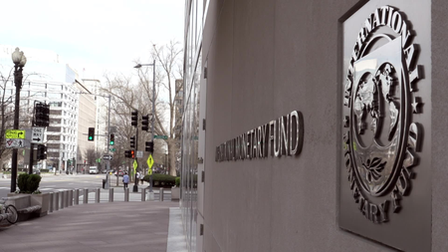
Emerging market economies have demonstrated resilience despite trade disruptions and geopolitical uncertainty, according to senior International Monetary Fund (IMF) officials. The IMF’s latest assessment, presented by IMF Economic Counsellor Pierre-Olivier Gourinchas, shows that global growth has remained strong, with the 2026 global growth forecast revised up to 3.3 per cent. This marks the third upgrade since April last year and exceeds previous projections made in October 2024.
Gourinchas credited this resilience to factors such as the agility of the private sector in adapting to disruptions, supportive financial conditions, and increased investment in technology and artificial intelligence. While the outlook appears positive, he cautioned that vulnerabilities are emerging beneath the surface, with growth becoming concentrated in information technology and AI. There are concerns about potential labor market impacts as AI deployment increases.
Despite the positive growth outlook, Gourinchas emphasized the need for vigilance among policymakers to monitor financial fragilities, rebuild fiscal buffers, and ensure central bank independence. Turning to emerging markets, he projected growth at around four per cent over the next two years, with improvements in policy frameworks noted across most regions. Latin America remains an exception to this trend.
Jihad Azour, Director of the IMF’s Middle East and Central Asia Department, echoed the theme of resilience, particularly in the face of region-specific risks. He highlighted the upgraded growth expectations for oil-exporting and oil-importing countries in the Middle East and North Africa. However, he pointed out four main risks for the region in 2026, including geopolitical tensions, global uncertainty, debt sustainability concerns, and oil price volatility.
