


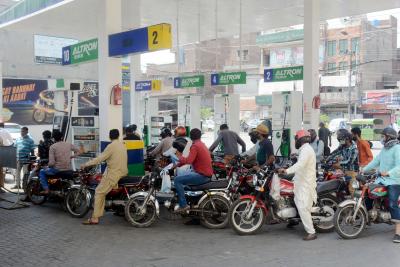
Asia’s growth remains robust, but the International Monetary Fund (IMF) has raised concerns about the impact of escalating oil and gas prices driven by the Middle East conflict. The IMF’s Director of the Asia and Pacific Department, Krishna Srinivasan, highlighted that the region faces challenges such as inflation and strained external balances due to the energy shock.
The IMF emphasized that Asia’s vulnerability is heightened by its energy-intensive economies and reliance on imports, with oil and gas constituting a significant portion of GDP. Despite these challenges, the IMF maintained its growth forecast, expecting a slight decline from 5% in 2025 to 4.4% in 2026 and 4.2% in 2027, contingent on the conflict’s containment.
Asia continues to be a key driver of global economic growth, according to the IMF. However, the organization cautioned that risks are skewed towards the downside, citing concerns such as high youth unemployment and potential job market disruptions from rapid artificial intelligence adoption. The IMF recommended policy reforms to bolster social safety nets, enhance domestic demand, and promote regional trade cooperation, alongside investments in renewable energy and efficiency measures to mitigate future shocks.
