


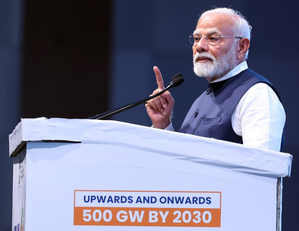
India has surpassed its 2030 renewable energy goals ahead of schedule, positioning itself as a leader in the global clean energy movement. By 2025, the country had met its Nationally Determined Contributions, with non-fossil fuels constituting 50% of its total installed power capacity of 484 GW, setting a significant example for large-scale decarbonization worldwide.
Union Minister for New and Renewable Energy Pralhad Joshi highlighted India’s success in renewable energy, attributing it to a robust political will and strategic initiatives. India witnessed remarkable growth in renewable energy capacity in 2025, adding 44.5 GW, with solar power at 135 GW and wind power at nearly 54 GW, solidifying its position as a renewable energy powerhouse.
Prime Minister Narendra Modi commended the achievement as a testament to India’s commitment to a sustainable future. The transition to clean energy not only saved over USD 46 billion in pollution-related costs but also avoided 410.9 million tonnes of CO₂ emissions and generated USD 31.7 billion in health benefits, underlining the economic advantages of clean energy adoption.
Initiatives like PM Surya Ghar Muft Bijli Yojana and PM Kusum are democratizing access to clean energy, benefiting both rural and urban communities. Furthermore, India’s National Green Hydrogen Mission is fostering a green hydrogen ecosystem, with the country’s production costs ranking among the lowest globally, as highlighted by Joshi in a Newsweek article.
India’s progress in clean energy is not only being recognized globally but also serves as a model for developing nations. The country’s approach prioritizes affordability, resilience, and inclusivity, ensuring that clean energy is accessible to all segments of society. This not only sets a precedent for renewable energy adoption but also opens avenues for digital advancement in the energy sector, ensuring that developing countries keep pace with evolving technologies.
Large-scale investments in hydrogen production, smart grids, AI-driven demand management, energy storage solutions, and EV infrastructure are part of India’s ongoing efforts to further decarbonize industries and transport, reduce oil dependence, and stabilize renewable-heavy systems. Minister Joshi emphasized that India’s achievements not only inspire but also provide a customizable roadmap for other nations to follow, tailored to their unique contexts and goals.
