


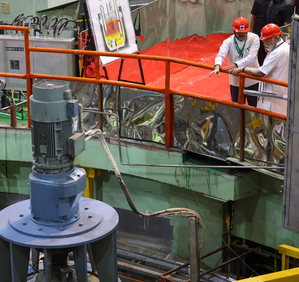
India has reached a significant milestone in nuclear energy by achieving first criticality of the 500 MWe Prototype Fast Breeder Reactor (PFBR) at Kalpakkam in Tamil Nadu. This reactor, developed by the Indira Gandhi Centre for Atomic Research (IGCAR) and built by BHAVINI, signifies the beginning of the second stage of India’s three-stage nuclear power program. It utilizes uranium-plutonium mixed oxide fuel to generate more fuel than it consumes, paving the way for leveraging India’s abundant thorium reserves in the future.
Union Minister Jitendra Singh highlighted that once fully operational, India will be the second country globally, following Russia, to operate a commercial-level fast breeder reactor. This achievement is crucial as it propels India towards utilizing its vast thorium reserves in the third stage of its nuclear strategy. Notably, Russia is currently the sole country operating commercial fast breeder reactors, with India making significant progress in commissioning its own.
Dr. Singh emphasized the importance of this milestone in India’s nuclear program, emphasizing the efficient utilization of nuclear fuel and the future utilization of thorium reserves. He stressed that nuclear energy will be vital for India’s transition to clean energy and achieving its long-term sustainability goals, including the target of 100 GW nuclear power capacity by 2047. The minister also highlighted the increasing reliance of sectors like Artificial Intelligence and advanced manufacturing on clean energy sources, where nuclear power will be indispensable.
The minister outlined the significance of initiatives like Small Modular Reactors (SMRs) and policy support in enhancing India’s nuclear energy capacity. Under the “Nuclear Mission,” with an allocation of Rs 20,000 crore, five SMRs are planned by 2033. SMRs are expected to be beneficial for captive power generation, especially in industries, densely populated areas, remote regions without grid connectivity, and repurposing thermal plants. A balanced energy mix, incorporating nuclear, renewable, and other clean energy sources, will be crucial in achieving the Net Zero goal by 2070.
