


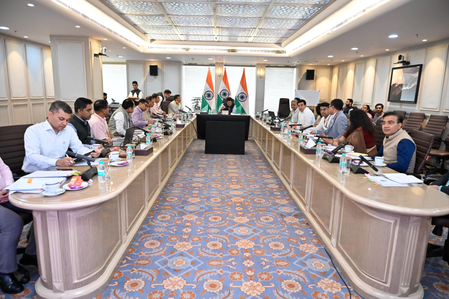
India has set a target of achieving $2 trillion in total exports by 2030–31, with $1 trillion each from merchandise and services exports. The Department of Commerce has devised a structured Export Monitoring Framework to guide sector-specific actions in areas like Engineering Goods, Textiles, Electronics, Pharmaceuticals, and Chemicals. Commerce Minister Piyush Goyal emphasized the importance of clear, actionable strategies with defined timelines to reach this ambitious goal.
Goyal outlined three key pillars crucial for attaining the export target. These pillars include sector-specific actions assigned to Nodal Joint Secretaries, categorized as supply-side or demand-side, with measurable key performance indicators aligned with short, medium, and long-term timelines. He stressed the significance of inter-departmental coordination to address exporter-related issues effectively.
In addition to the structured approach, Goyal highlighted the necessity of an IT-enabled monitoring platform for tracking progress regularly. This platform would feature an automated escalation mechanism for reviews at the Secretary and Ministerial levels. The Minister also called for the identification of priority sectors where an import substitution strategy could be pursued alongside export promotion efforts.
Furthermore, Goyal reviewed the progress of the Export Promotion Mission, a flagship initiative focused on addressing challenges faced by exporters and fostering sustainable export growth, particularly among MSMEs. The Mission comprises two integrated sub-schemes, ‘Niryat Protsahan’ for trade finance access and ‘Niryat Disha’ for market access, with ten operational components supporting various aspects of export facilitation.
