


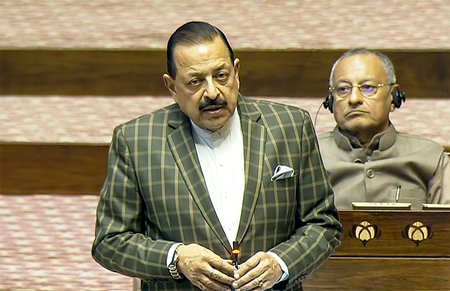
Minister of State in the Department of Atomic Energy, Dr. Jitendra Singh, revealed plans to have five indigenous small modular nuclear reactors operational by 2033. This initiative aligns with India’s target of achieving a 100 GWe nuclear power generation capacity by 2047. The Bhabha Atomic Research Centre is working on developing a 220-megawatt Bharat Small Modular Reactor, a 55-MW reactor, and a high-temperature gas-cooled reactor for hydrogen production.
The government has outlined a roadmap to reach the 100 GW nuclear power capacity by 2047, as per the Nuclear Energy Mission announcement. Currently standing at 8.78 GW, the nuclear power capacity is projected to increase to about 22 GW by 2031-32 through the completion of ongoing projects. The SHANTI Act, 2025, has been enacted by Parliament, focusing on the Nuclear Energy Mission to achieve the 100 GW target by 2047, thereby allowing private participation in the nuclear energy sector.
NPCIL aims to establish an additional 32 GW of nuclear power capacity post-2032, including indigenous Pressurised Heavy Water Reactors and Light Water Reactors by 2047, bringing the total capacity to around 54 GW. The remaining 46 GW is expected to be set up by various entities like Public Sector Enterprises, State Governments, Private sector, and Joint Ventures in different business models, incorporating reactors of diverse technologies.
The Atomic Energy Commission has approved Tarapur, Maharashtra, as the site for the 220-megawatt Bharat Small Modular Reactor (BSMR-200). In-principle approvals for engineering and construction have been granted, with financial sanctions cleared by the Atomic Energy Commission and approval from the Empowered Technology Group obtained. Similarly, the SMR-55, based on Pressurised Water Reactor design, has received in-principle approval for engineering and construction at Tarapur, Maharashtra.
The High-Temperature Gas-Cooled Reactor (HTGCR) with a capacity of up to 5 MWth is being developed by BARC as a nuclear heat source for hydrogen production. In-principle approvals for engineering and construction have been secured, with BARC, Vizag identified as the proposed site for the reactor.
