


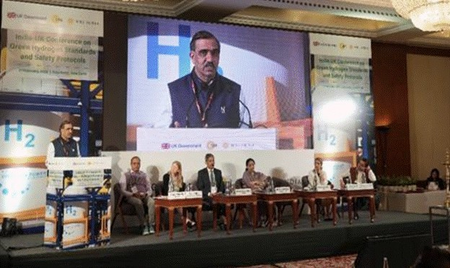
India and the United Kingdom recently convened a conference in New Delhi to enhance collaboration on safety standards and regulatory frameworks for green hydrogen. This initiative aligns with India’s National Green Hydrogen Mission, promoting clean energy sources. The event brought together various stakeholders from government, industry, academia, and regulatory bodies of both nations.
The conference primarily aimed at bolstering cooperation for the safe implementation of green hydrogen technologies within India’s National Green Hydrogen Mission. Discussions at the event encompassed safety frameworks, international standards, and regulatory practices throughout the green hydrogen value chain, covering production, storage, transportation, and end-use applications.
Organized by the National Centre for Hydrogen Safety in partnership with the British High Commission in India and World Resources Institute India, the conference commenced with insights from Mohammad Rihan, Director General of the National Institute of Solar Energy. Keynote speaker Parvinder Maini emphasized the necessity of robust safety frameworks, clear standards, and global partnerships to facilitate the widespread adoption of green hydrogen technologies.
The conference also featured the participation of key regulators overseeing hydrogen safety and standards in India. Notably, discussions included regulatory strategies for safety compliance, risk assessment, and hazard management in hydrogen systems by officials from the Petroleum and Explosives Safety Organisation. Additionally, the Bureau of Indian Standards shared perspectives on formulating hydrogen standards in alignment with global best practices.
Technical sessions during the conference included presentations by industry experts, research institutions, and academia focusing on safe design and operation of hydrogen facilities, storage systems, transportation, and safety protocols for hydrogen applications. Experts delved into topics such as risk assessment methodologies, insights from previous incidents, and advancements like advanced sensors and AI-based monitoring systems for ensuring hydrogen safety.
