


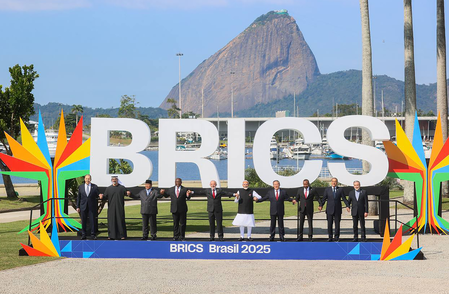
India faces a key challenge in managing its foreign policy focus between the US and BRICS, especially as some BRICS members are under increased US scrutiny. While India sees BRICS as a way to support the global multilateral order, countries like Russia and China view it as a strategic tool against the USA. India’s current US policy, driven by national interest, differs from other BRIC members on this matter.
During its upcoming BRICS presidency, India aims to advocate for the interests of the Global South, emphasizing their rightful place in the global financial system and a stronger voice in world affairs. India has historically championed the aspirations of the neglected world, supporting Global South Cooperation and emphasizing inclusive growth and collaboration, as outlined in the 2025 BRICS Rio de Janeiro Declaration.
India’s BRICS presidency will prioritize advancing multilateralism and working towards reforming global governance for a fairer, more effective international system. Prime Minister Narendra Modi has highlighted BRICS as a significant asset for India, boosting confidence and promoting diversity and multipolarity in global affairs. India’s leadership in BRICS will guide the world amid current global pressures.
A major test for India’s presidency will be managing US pressure and its implications within the BRICS group. Despite facing a 50% tariff from the US, India has chosen a non-confrontational approach, unlike Brazil, which threatened retaliation. India urges BRICS members to address trade imbalances with New Delhi, positioning BRICS as an alternative for developing nations, aligning with India’s commitment to empowering weaker states in global affairs.
