


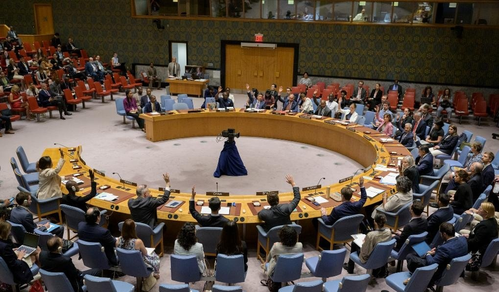
The Ministry of External Affairs (MEA) announced that India has co-sponsored a resolution led by the Gulf Cooperation Council (GCC) at the United Nations Security Council (UNSC) to safeguard the welfare of the significant Indian diaspora in GCC nations. MEA spokesperson Randhir Jaiswal highlighted India’s support for the resolution during a media briefing, emphasizing the importance of the well-being of Indian expatriates in the Gulf region. The resolution, backed by 135 countries, aligns with India’s stance on the safety and security of its diaspora in the GCC countries, crucial for India’s energy security interests.
Jaiswal confirmed India’s active engagement in addressing the ongoing conflict in West Asia, stressing the need to prioritize the protection of all individuals caught in the turmoil. He mentioned that India had issued multiple statements regarding the conflict, expressing condolences for the lives lost and emphasizing the safety of civilians as a top priority. The External Affairs Minister also provided insights on the situation during a parliamentary session, underscoring India’s concerns and positions on the matter.
Jasem Mohamed Albudaiwi, the Secretary General of the GCC, welcomed the UNSC resolution condemning Iranian military actions against GCC States and Jordan. The resolution, supported by 136 nations, signifies global solidarity against Iranian aggression and upholds the right of self-defense for the affected nations. Albudaiwi denounced Iran’s violations of international laws and norms, particularly its targeting of civilians and critical infrastructure in the region, emphasizing the need for international condemnation and support for the affected states.
Bahrain’s Permanent Representative Jamal Fares Alrowaiei disclosed that the GCC nations collectively intercepted numerous Iranian missiles, drones, and aircraft, highlighting the disruptive impact of these attacks on trade and maritime routes. Alrowaiei announced the GCC’s intention to seek a Security Council condemnation of Tehran for its actions, which have severely affected regional and global economies. The attacks, aimed at civilian areas and essential infrastructure, have raised concerns about the safety and stability of the region, prompting a unified response from the GCC countries.
