


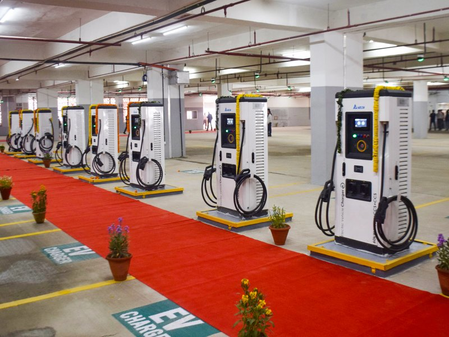
India has made significant strides in enhancing its electric vehicle charging infrastructure, currently operating 52,718 public charging stations nationwide. Among these, 16,561 stations are equipped with fast EV chargers for cars, aiming to reduce charging times, a key concern for EV users. The Minister of State for Heavy Industries, Bhupathiraju Srinivasa Varma, highlighted these developments in a written response to Lok Sabha.
The Ministry of Heavy Industries has initiated various measures to bolster the EV ecosystem and promote the adoption of electric mobility. Under the FAME-II scheme, Rs 912.50 crore has been allocated, along with Rs 2,000 crore under the PM E-DRIVE scheme, to establish public EV charging stations in urban areas and along national highways.
Moreover, the Ministry of Power has introduced guidelines for the installation and operation of electric vehicle charging infrastructure by 2024. These guidelines set standards for creating a connected and interoperable charging network, including provisions for battery swapping and charging facilities. Notably, the establishment of EV charging stations has been categorized as an unlicensed activity, facilitating private investment in charging infrastructure.
In a move to boost domestic electric vehicle manufacturing, electric passenger cars are now covered under the Production Linked Incentive (PLI) Scheme for Automobile and Auto Components. Eligible manufacturers are offered financial incentives ranging from 13% to 18% on incremental sales of Advanced Automotive Technology (AAT) vehicles, including electric four-wheelers.
Under the PM E-DRIVE scheme, the government has allocated Rs 4,391 crore for deploying 14,028 electric buses. These buses have been allocated to major cities like Delhi, Bengaluru, Hyderabad, Mumbai, Ahmedabad, Pune, and Surat, with the tender process for selecting operators already completed in two phases.
