


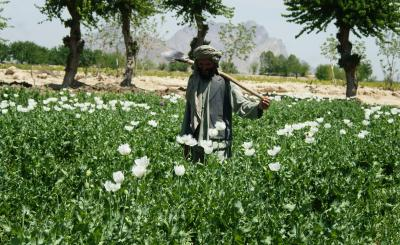
India is currently experiencing a significant increase in narcotic smuggling, with Balochistan witnessing a surge in poppy cultivation to facilitate drug trafficking into the country. The Afghan Taliban’s ban on poppy cultivation on April 3, 2022, which eradicated 95% of poppy cultivation in Afghanistan, has been a relief for India, a major market for narcotic smugglers. However, Pakistan has capitalized on this ban by making Balochistan a primary hub for poppy cultivation and supporting methamphetamine labs in Myanmar.
Indian officials emphasize the critical juncture in the fight against drugs, highlighting the escalating situation in Balochistan and the fragile security environment in Myanmar, which could lead to an increase in narcotics trade by cartels. The ISI, relying heavily on narcotic trade money to fund terror operations in India, has orchestrated a substantial rise in poppy cultivation in Balochistan.
The ongoing chaos in Balochistan, stemming from clashes between Pakistan security forces and the Balochistan Liberation Army (BLA), has provided an opportunity for poppy cultivators to thrive unhindered. The ISI aims to exploit this situation further to penetrate Indian markets with a larger drug supply.
The ban on poppy cultivation dealt a significant blow to the ISI, prompting Pakistan to redirect the trade to Balochistan after strained ties with the Afghan Taliban. By inviting Afghan poppy farmers to cultivate poppy in Balochistan and expanding production, the ISI plans to increase drug trafficking into India significantly. Indian law enforcement agencies are advised to closely monitor potential drug routes, particularly through maritime and desert land routes from Balochistan to India.
Officials caution that the ISI may utilize international routes via Gulf states like Saudi Arabia, Oman, or Dubai to smuggle drugs into India. The use of drones in Punjab to drop drugs and the enhancement of drone capabilities by the ISI pose additional challenges for Indian agencies in combating drug trafficking. Poppy cultivation in Balochistan, overseen by the ISI and supported by the army, has not only impacted India but also European nations affected by the drug trade.
