


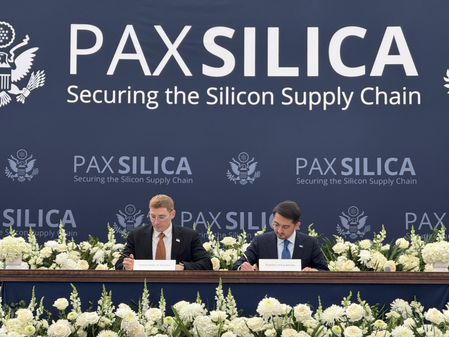
India has joined the United States and 34 other nations in supporting a new declaration on artificial intelligence (AI) during the Pax Silica Summit. The Joint Statement on AI Opportunity, revealed at the summit, focuses on fostering a pro-growth and pro-innovation approach to AI. This commitment aims to encourage trusted partnerships across various sectors like critical minerals, semiconductors, energy, advanced manufacturing, and AI infrastructure.
The U.S. State Department, hosting the summit, announced that 10 additional countries have signed the Pax Silica Declaration. This brings the total membership to 24 countries and economies. New signatories include Argentina, Chile, Costa Rica, El Salvador, the European Union, Germany, Greece, Kazakhstan, the Netherlands, and Panama. India is already part of this initiative, along with other countries like Australia, Japan, the United Kingdom, and the United States.
The AI Opportunity Statement emphasizes the importance of a regulatory framework that empowers builders, startups, developers, and the private sector. It also stresses the need for secure global AI supply chains. Signatories of the declaration pledge to support policies that drive technological innovation, encourage investment, and create a regulatory environment conducive to AI innovation. Additionally, there are plans to enhance cooperation on semiconductor ecosystems, energy infrastructure, critical minerals, and skilled workforces.
As part of the summit’s outcomes, the State Department introduced the pilot Artificial Intelligence Assistance Project in Panama. This project aims to establish an AI supply chain credentialing platform to facilitate the movement of semiconductors, critical minerals, and AI infrastructure through trusted logistics networks. Furthermore, the department launched the Foundry School initiative in partnership with Stanford University. This program will kick off with a seminar series for founders and chief executives in advanced manufacturing, followed by a curriculum that educational institutions across Pax Silica economies can adopt.
