


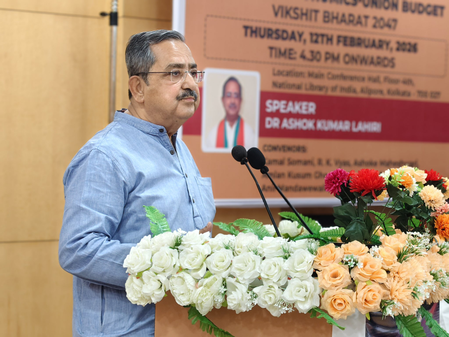
India’s semiconductor ecosystem is advancing swiftly, with NITI Aayog Vice Chairman Ashok Kumar Lahiri stressing the importance of technological sovereignty for realizing the Viksit Bharat vision. Lahiri highlighted the risks posed by India’s increasing reliance on imported black-box technologies in its semiconductor roadmap.
Acknowledging the significant strides made, Lahiri mentioned the India Semiconductor Mission, early investments in design, manufacturing, and partnerships with the US, Japan, and Europe as key drivers of progress. He emphasized the critical nature of the next decade in solidifying a robust national capability from this momentum.
Lahiri underlined the necessity for India to establish technological sovereignty starting from the infrastructure layer, particularly in sectors like artificial intelligence, defense, manufacturing, and communications, where semiconductors play a foundational role. He also pointed out the clear and practical vision outlined in the NITI Frontier Tech Hub roadmap for India’s semiconductor future.
According to Lahiri, the roadmap recognizes the need for India to focus deeply on selected strategic areas within the semiconductor value chain rather than attempting to compete across all segments simultaneously. He highlighted the importance of prioritizing specific strategic areas such as design, advanced packaging, and compound semiconductors to position India as a global leader in the semiconductor industry.
At NITI Aayog, Lahiri emphasized the translation of strategy into action, outlining a roadmap with a strong implementation-oriented approach. The plan identifies key priorities for the next decade, the necessary enabling conditions for growth, and the sectors where India has the potential to emerge as a global leader in semiconductor technology.
