


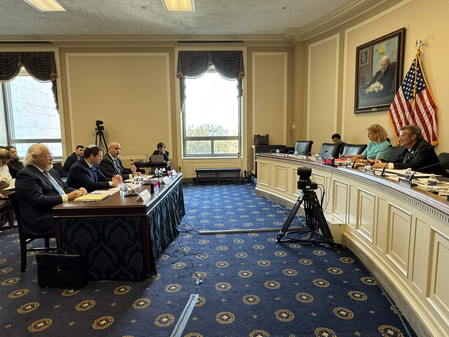
The India-Middle East-Europe Economic Corridor (IMEC) has garnered bipartisan support during a US congressional hearing focused on the future of the Abraham Accords. Lawmakers and experts hailed IMEC as a strategic counter to China’s Belt and Road Initiative, with the potential to cut transit times between India and Europe by over 50%. Witnesses emphasized the significance of IMEC within the broader regional integration efforts, urging the United States to play a more active role in advancing the corridor.
Asher Fredman, Executive Director of the Misgav Institute for National Security, described IMEC as a groundbreaking infrastructure project with the potential to significantly reduce transit times and create an economic zone aligned with US interests. He called for comprehensive studies on IMEC’s economic impact, investment opportunities, and customs harmonization to facilitate trade between India and Europe. Fredman also proposed the establishment of an IMEC leaders forum and a secretariat for enhanced accountability.
Former US Ambassador to Israel Daniel Shapiro highlighted IMEC as a key regional initiative following the Abraham Accords, emphasizing its strategic importance amid regional instability. He underscored the need for alternative trade and energy routes, especially in light of disruptions in the Strait of Hormuz. Shapiro urged a focus on infrastructure development to ensure the corridor’s viability and resilience.
Committee Chairman Mike Lawler cautioned against excluding Israel from the IMEC project, emphasizing the importance of regional cooperation in its design. He expressed concerns over proposals to remove Israel from the corridor plans and advocated for Israel’s continued involvement. Former US Ambassador to Israel David Friedman emphasized the role of connectivity projects like IMEC in fostering peace and economic opportunities in the Middle East, urging Congress to support such initiatives.
Despite political challenges, IMEC is seen as a crucial connectivity project for India, promising reduced shipping times, diversified supply chains, and stronger economic ties with West Asia and Europe. It is a cornerstone of the India-US strategic partnership and is positioned as a rules-based alternative to China’s Belt and Road Initiative.
