


India’s rapid electrification and expansion of renewable energy sources could position the country as one of the leading markets for power equipment globally by 2035. A report highlighted that renewable energy equipment and high-end cables alone could present a substantial opportunity worth $350-400 billion by 2035, with the global power electronics market potentially exceeding $140 billion. Domestic electrical equipment consumption in India has already reached $59 billion in FY25, showing an 11% compound annual growth rate over the past five years and is projected to hit $170–205 billion by 2035.
The report emphasized the importance of scaling up domestic manufacturing to avoid heavy import dependence, which has risen from 22% in 2020 to 33% in 2025. Without significant changes, import reliance could surge to over 70% by 2035, leading to a potential production shortfall exceeding $130 billion. Urging a fivefold expansion in domestic capacity across key areas like power electronics, batteries, solar photovoltaic cells, and subcomponents, the report aims to reduce import dependence to less than 14% by 2035.
Highlighting the urgency for localizing production, the report identified power electronics, batteries, solar photovoltaic cells and modules, and subcomponents as key segments requiring immediate attention. It also recommended expanding capacity in AC compressors, transformers, and cables to enhance self-reliance in the sector. Additionally, emerging high-growth segments such as grid stabilisation technologies and power software were underscored to manage the complexities of renewable energy-heavy electricity systems.
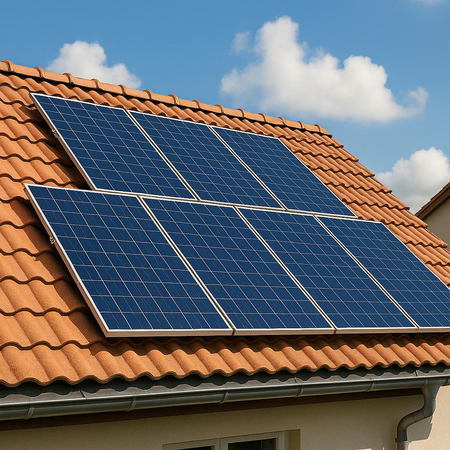
The report also pointed out subsea and high-speed rail cables as priority areas where India could enhance its global export competitiveness. Notably, India recently achieved a significant milestone by connecting 40 lakh homes to rooftop solar power under the ‘PM Surya Ghar Muft Bijli Yojana’. The International Energy Agency (IEA) projects that nearly half of India’s additional electricity demand until 2030 will be met through solar energy, with another quarter coming from low-carbon sources like wind, hydroelectric, and nuclear power.
