


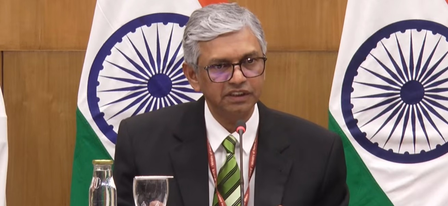
India restated its dedication to the legal system, dismissing accusations of involvement in transnational organized crime as unfounded and politically driven. Secretary (East) in the Ministry of External Affairs (MEA), Periasamy Kumaran, emphasized the need to address such concerns through law enforcement and judicial channels rather than publicized claims. India firmly denied any links to transnational violence or organized crime, labeling the allegations baseless and lacking credible evidence despite repeated inquiries.
Kumaran addressed questions regarding the case of Khalistani terrorist Hardeep Singh Nijjar, stating that the criminal investigation is progressing according to established legal procedures. The diplomatic relations between India and Canada had strained following former Canadian Prime Minister Justin Trudeau’s claims of India’s involvement in Nijjar’s killing, leading to a significant diplomatic dispute. India refuted all accusations, deeming them absurd and motivated, and criticized Canada for harboring extremist and anti-India elements.
During the briefing, Kumaran highlighted the ongoing security cooperation between India and Canada, acknowledging advancements in initiatives aimed at enhancing the safety and security of both nations and their citizens. He mentioned the joint efforts in counter-terrorism through mechanisms like the Joint Working Group (JWG) and consular dialogues to address various security issues, including extradition and law enforcement cooperation. Both countries agreed to establish security and law enforcement liaison officers to facilitate communication and information sharing on mutual concerns such as the illegal drug trade and transnational criminal networks.
