


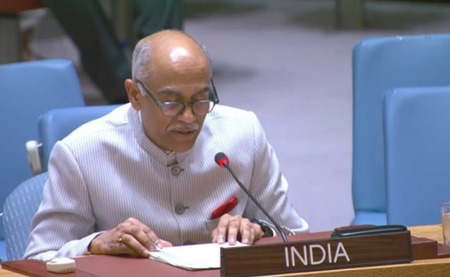
India criticized suggestions to solely increase the non-permanent seats on the UN Security Council, labeling it as nearly failing to reform the decision-making structure dominated by the P5 permanent members. P Harish, India’s Permanent Representative, emphasized the necessity for genuine reform that includes expanding the permanent membership to alter the power dynamics within the Council.
At a meeting of the Intergovernmental Negotiations for Council reform, Harish highlighted that limiting expansion to non-permanent seats would not address the core issue of decision-making authority vested in the existing permanent members. Uniting for Consensus (UfC), a group opposing the addition of permanent members, has obstructed the reform process by demanding consensus before negotiating text adoption.
India has persistently advocated for a more balanced Security Council by expanding permanent membership to mitigate the dominance of the P5. Harish underscored the urgent need to modernize the Council’s structure, which currently reflects a post-World War II era paradigm, in contrast to the democratic principles upheld by the General Assembly.
Critiquing the “Elements Paper” proposed by the IGN co-chairs, Harish emphasized the clarity of the UN Charter in distinguishing between permanent and non-permanent members. He urged for a defined timeline and milestones in the reform process to prevent stagnation and entrenchment of existing inequities within the Council.
