


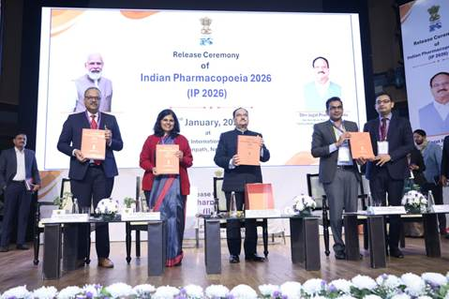
India has advanced from 123rd to 8th place globally in the World Health Organization’s pharmacovigilance contributions, as announced by Union Minister for Health and Family Welfare J. P. Nadda. Speaking at the launch of the Indian Pharmacopoeia 2026 (IP 2026), Nadda emphasized the significance of this milestone at an event in New Delhi.
The Indian Pharmacopoeia, serving as the official standards book for drugs in India, plays a crucial role in the country’s pharmaceutical regulatory framework. The 10th edition, IP 2026, reflects scientific progress, global best practices, and India’s increasing leadership in pharmaceutical manufacturing and regulation, according to Nadda.
Highlighting the success of the Pharmacovigilance Programme of India (PvPI) under the Indian Pharmacopoeia Commission (IPC), Nadda noted India’s remarkable progress in global rankings. From being ranked 123rd in 2009-2014, India has now secured the 8th position worldwide in 2025 in terms of contributions to the WHO pharmacovigilance database.
Moreover, the Indian Pharmacopoeia 2026 has incorporated 121 new monographs, expanding the total to 3,340. This expansion includes a strengthened coverage across essential therapeutic categories like anti-tubercular, anti-diabetic, and anti-cancer medications, as well as iron supplements, ensuring comprehensive standardization of medicines used in various National Health Programmes.
Commending the IPC and the PvPI team for their achievements, Nadda highlighted the enhanced pharmacovigilance ecosystem, reflecting India’s enduring commitment to patient safety, quality assurance, and regulatory vigilance. He also mentioned the growing international recognition of Indian Pharmacopoeia standards, emphasizing its acceptance in 19 countries of the global south.
Additionally, Nadda underscored significant regulatory progress, including the inclusion of 20 blood component monographs related to transfusion medicine in the Indian Pharmacopoeia 2026, aligning with the provisions of the Drugs and Cosmetics (Second Amendment) Rules, 2020.
