


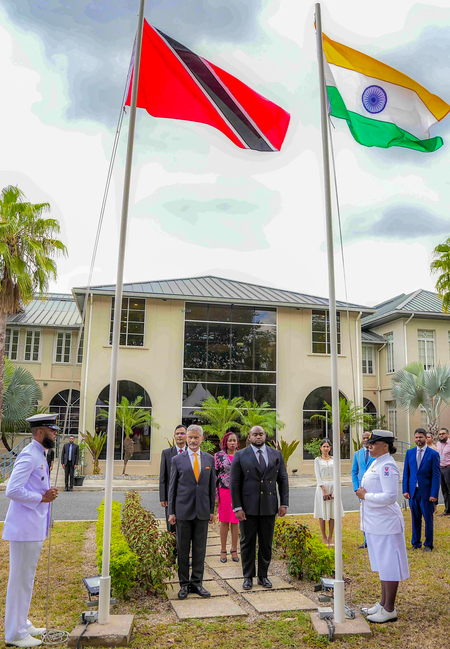
India has been a steadfast supporter of the Caribbean Community (CARICOM) countries since their decolonization and early nation-building phase. The relationship saw a boost during Prime Minister Narendra Modi’s visit to Trinidad and Tobago last year, commemorating the 180th anniversary of Indian immigrants’ arrival in 1845. External Affairs Minister S Jaishankar’s recent visits to Jamaica, Suriname, and Trinidad and Tobago further solidified the India-CARICOM relations, focusing on enhancing bilateral partnerships.
During a historic visit to Guyana, PM Modi became the second Indian Prime Minister to visit the Caribbean in 2024 after a 56-year gap, signifying a significant milestone in strengthening comprehensive bilateral ties. The second CARICOM-India summit, co-chaired by PM Modi and Grenada’s Prime Minister, Dickon Mitchell, with the participation of all CARICOM leaders, marked a pivotal moment in the relationship. Prime Minister Modi presented a seven-pillar framework aimed at enhancing cooperation between India and CARICOM, covering various sectors such as capacity building, agriculture, renewable energy, climate change, innovation, technology, ocean economy, maritime security, medicines, and healthcare.
The summit outlined key initiatives, including the provision of 1,000 IT scholarships, establishment of a regional forensic center, expansion of India’s technology center in Belize, and online training for civil servants in capacity building. In the agriculture and food security sector, India pledged to share advancements in agriculture technology and promote millet cultivation. Additionally, PM Modi invited CARICOM member states to join the International Solar Alliance and the Global Biofuel Alliance to address renewable energy and climate change challenges.
Under the themes of innovation and technology, India offered to share digital payment systems and eMarketplace models, fostering collaboration on ‘Stack’ infrastructure to support small and medium-sized enterprises. The summit also emphasized cooperation in the ocean economy and maritime security, positioning CARICOM as countries with vast marine resources and pledging support against piracy and trafficking. Moreover, in the field of medicines and healthcare, the summit aimed to provide shared affordable healthcare solutions through India’s ‘Janaushadi’ scheme, telehealth programs, advanced cancer treatment technologies, and adoption of the Indian Pharmacopoeia to reduce healthcare costs.
Ralph Maraj highlighted the significant opportunities for the Caribbean Community with India emerging as the world’s fourth-largest economy. He emphasized the importance of having India as a friend to CARICOM amid increasing geopolitical uncertainties, underscoring the mutually beneficial relationship between the two entities.
