


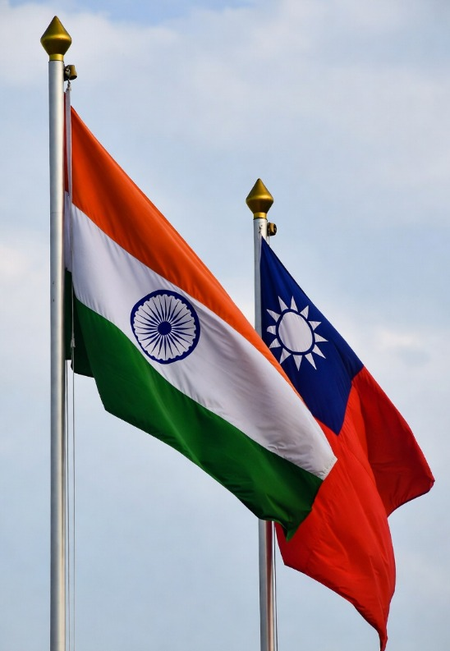
India and Taiwan are transitioning from cautious commercial relations to a more structured partnership encompassing technology, labor mobility, and supply chains. This shift aligns with India’s Act East Policy and Taiwan’s New Southbound Policy, emphasizing technological security, supply chain resilience, and strategic interests in the Indo-Pacific region. The evolving relationship is expanding India’s strategic capabilities, moving beyond historical constraints influenced by China.
Historically, India’s engagement with Taiwan was limited by territorial sensitivities with China, leading to a careful balancing act. However, the partnership is now broadening to include technology, labor mobility, education, and supply chains, enhancing India’s strategic scope. By aligning the Act East Policy with the New Southbound Policy, Taiwan is seen as a valuable partner for industrial transformation and reducing exposure to supply chain disruptions.
India’s Taiwan policy is no longer solely driven by concerns related to China but is increasingly focused on technological security, supply chain resilience, and strategic positioning in the Indo-Pacific region. The synergy between Taiwan’s technological expertise and India’s market size is fostering a more robust regional economic framework less dependent on China’s supply chain dominance. Initiatives like the Talented Labour Agreement between TECC and the Mizoram government signify a deeper integration beyond economic rhetoric.
The establishment of the third Taipei Economic and Cultural Center in Mumbai demonstrates a strategic expansion of engagement despite sensitivities with Beijing. India’s consistent stance on Taiwan policy emphasizes clarity and consistency. Track dialogues between India and Taiwan are aimed at normalizing Taiwan’s involvement in non-sensitive strategic areas, addressing broader challenges in the Indo-Pacific like maritime governance, cybersecurity, and supply chain resilience.
These dialogues support Taiwan’s role as an economic partner and stakeholder in the Indo-Pacific, fostering cooperation in strategically vital domains without formal security cooperation. By building a rules-based order through regional cooperation, actors aim to safeguard maritime commons and high-tech ecosystems without immediate diplomatic realignments.
