


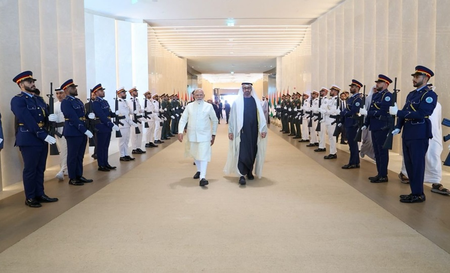
Agreements between India and the United Arab Emirates, signed during Prime Minister Narendra Modi’s visits, aim to enhance strategic-economic ties. The deals cover areas like energy storage, long-term fuel supplies, defense cooperation, and artificial intelligence. These agreements, as per a report by India Narrative, focus on bolstering India’s energy resilience, maritime security, digital ecosystems, and emerging AI capabilities.
The agreements involve a significant $5 billion investment commitment through the National Investment and Infrastructure Fund (NIIF) of India and the Abu Dhabi Investment Authority (ADIA). Additionally, there is a provision to store up to 30 million barrels of crude oil, potentially in Fujairah, to support India’s strategic petroleum reserves. This move is crucial for ensuring long-term capital accumulation in critical sectors requiring sustained investment.
Strategically, these agreements pave the way for increased participation of Gulf sovereign wealth in India’s economic growth and transformation. They position the UAE as a key stakeholder in India’s economic stability, infrastructure development, and market expansion. The partnership is seen as a significant step towards enhancing India’s economic resilience and security.
The deal also includes a $3 billion LNG agreement, with ADNOC Gas set to supply LNG to India’s Hindustan Petroleum Corporation Limited (HPCL) over a decade, with potential for further expansion. Such long-term commitments are aimed at stabilizing India’s fuel imports and ensuring predictability amidst challenges like rising shipping costs and insurance premiums due to regional instability.
The collaboration extends to technological domains, particularly in artificial intelligence (AI) and high-performance computing (HPC). This cooperation is expected to bolster India’s advanced computing capabilities and significantly enhance the country’s AI ecosystem. It will support various initiatives related to defense technologies, climate modeling, cybersecurity, language models, and industrial innovation.
Prime Minister Modi’s visit to Abu Dhabi, en route to Europe, holds significance against the backdrop of the UAE’s recent decision to exit the OPEC quota system. This move allows the UAE more flexibility in oil production and opens avenues for bilateral supply agreements with key partners like India.
